The Culture of Marathon Spectating
Millions gather on city streets to transform strangers' suffering into shared ritual.
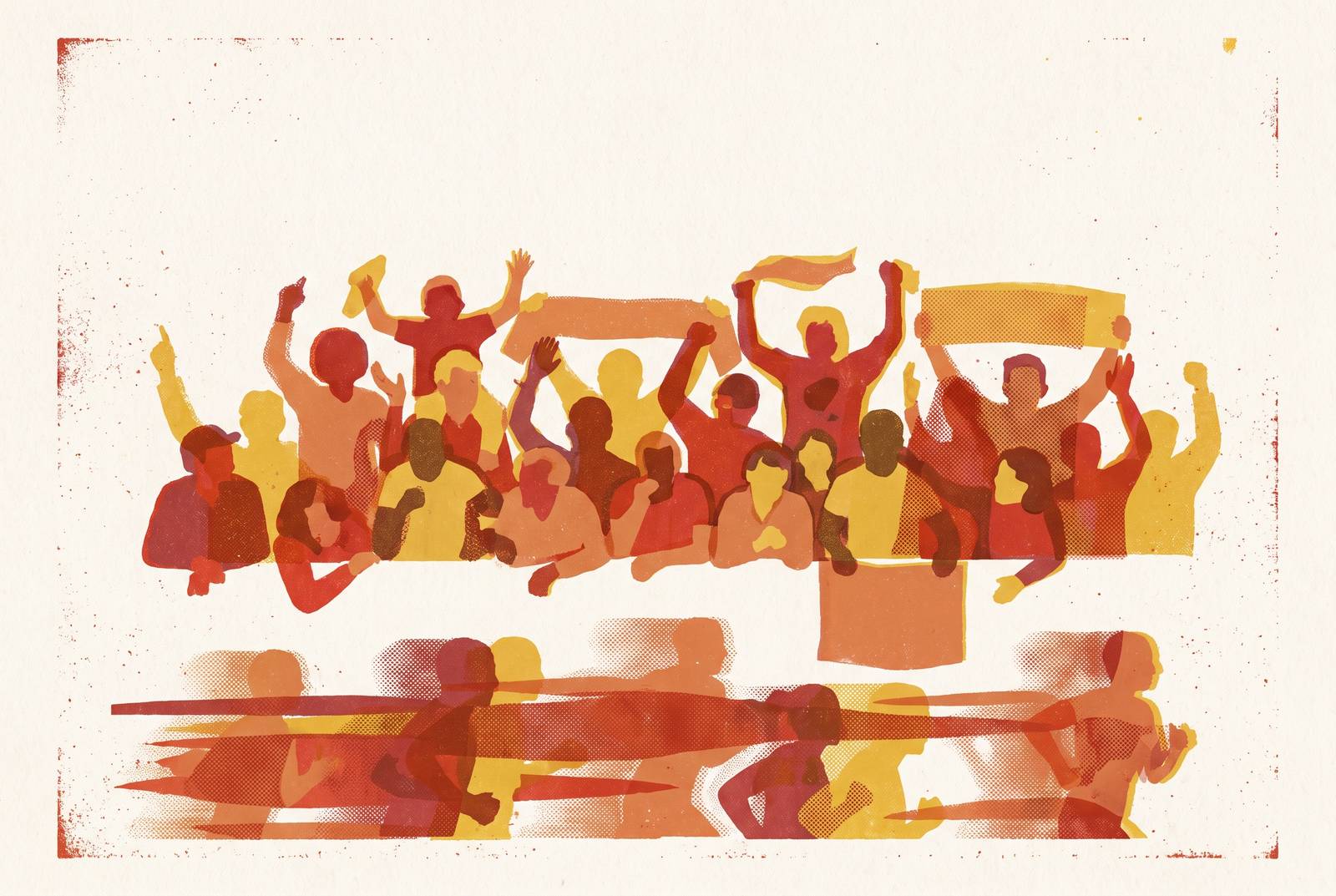
Marathon spectating draws crowds too large to explain as mere politeness toward friends and family on the course. It has become a cultural act with its own logic, its own rituals, and its own emotional stakes, distinct from the race itself but inseparable from it.
Marathon spectating as a cultural phenomenon in its own right
A marathon does not happen in a stadium, behind a ticket gate, or inside any structure designed to hold an audience. It happens across an entire city, through neighborhoods, past landmarks, along streets that were never built to be performance spaces. That geography changes what spectatorship even is. It cannot be corralled, counted at a turnstile, or contained to a single vantage point. It spreads across miles and hours, and it belongs to whoever shows up.
The Chicago Marathon illustrates the scale involved. The course starts and finishes in Grant Park and loops through 29 neighborhoods, drawing well over a million spectators along the way. That figure matters less as a measure of runner support and more as evidence of cultural gravity: when more than a million people organize a portion of their day around watching strangers run past them, the event has already become a ritual, not merely a competition. Frontiers in Psychology, in 2025 research, frames the marathon as a hybrid phenomenon that fulfills individual health goals, creates social interaction, and satisfies deeper psychological needs for recognition and meaning, and the research notes that the open-urban format draws heterogeneous groups in a way enclosed sports cannot replicate. A football stadium sorts its audience by ticket price and team loyalty. A marathon course sorts nobody. Anyone can stand at the rail.
That openness raises a real question. What is actually happening when this many people give up hours of their day to cheer for people they will never meet again? The answer requires a framework built for exactly this kind of collective behavior, one that sociology developed more than a century ago for describing how shared rituals bind strangers into something resembling a temporary community.
Durkheim's "Collective Effervescence" on the Race Course
Émile Durkheim's concept of collective effervescence describes the shared emotional energy that rituals generate, an energy strong enough to make individuals feel part of something larger than their own separate lives. The Everyday Sociology Blog applied this concept directly to marathon events in March 2026, arguing that the framework explains why marathon crowds behave the way they do rather than simply describing them.
A marathon meets Durkheim's definition of a ritual on every count. It has a fixed form: a specific distance, a specific course, a defined start and a defined finish. It has a community of participants organized around a shared purpose, runners pursuing the same 26.2 miles under the same conditions on the same day. And it has symbols carrying meaning well past their practical function: the medal, the bib, the finishing time, each one a physical object standing in for months of preparation.
Spectators are not bystanders to this ritual. Their presence, their noise, and their sustained attention are structurally necessary to it, in the same way a congregation is necessary to a religious service rather than incidental to it. A marathon run in silence, with no one along the route, would still be a race. It would not be a marathon in the cultural sense that draws a million people to Grant Park. The distance itself carries weight here too. It is a storied distance, uncomfortable for nearly everyone who attempts it, and running it connects a finisher to an international community of people who have suffered through the same distance in cities around the world. Spectators understand this cost, even without having run it themselves, and their witness functions partly as an acknowledgment of what the distance demands.
How the course shapes where spectatorship intensifies
Collective effervescence does not spread evenly across 26.2 miles. It concentrates at specific points along a course, and those points, repeated year after year, take on identities of their own, recognized by runners and spectators alike before a single wave of the race begins.
Boston's course demonstrates this concentration clearly. The route moves from the "scream tunnel" to Heartbreak Hill to the final stretch in downtown Boston, and each functions as a distinct spectator environment with its own character and emotional register. The scream tunnel at Wellesley is among the loudest points on any marathon course anywhere. Thousands of spectators press close along a narrow stretch of road, and runners report hearing the noise from a half-mile away before they even reach it. The sound arrives as a wall.
Heartbreak Hill sits at the opposite emotional pole. The climb comes in the final third of the race, when runners are already depleted, and the encouragement shifts registers accordingly, moving from the euphoric noise of the scream tunnel to something more urgent and more focused. Spectators who station themselves on Heartbreak Hill know they are watching runners at the hardest point of the entire course, and their cheering reflects that knowledge.
London organizes its spectatorship differently, around civic landmarks rather than terrain. The route passes Cutty Sark, Tower Bridge, Canary Wharf, and Buckingham Palace, each one a recognizable piece of the city that charges the act of running past it with meaning beyond the mile marker. These landmarks give spectators a frame for understanding exactly where they are standing relative to the whole course, and an estimated 800,000 spectators attended the 2026 London Marathon in person, gathering at these points across the city. What both Boston and London share is that these locations accumulate meaning across editions of the race. A spectator standing at Heartbreak Hill or at Tower Bridge is not simply watching this year's field pass by. They are participating in a place-memory that has built up over decades of the same race running through the same streets.
The signs, the strangers, and the specific grammar of encouragement spectators use
Along every stretch of every course, spectators have developed a shared vernacular for encouraging runners, a set of conventions immediately legible to anyone who has ever run or watched a marathon, regardless of which city they are standing in.
The hand-lettered sign is the clearest expression of this vernacular. The Everyday Sociology Blog documents signs reading "You're My Favorite Runner" and "A Stranger is Proud of You" as fixtures of marathon courses, messages structurally interesting because they address everyone and no one at once, personal in tone but universal in application. "A Stranger is Proud of You" names its own strangeness directly. The sign acknowledges that the person holding it and the person reading it have never met, and it asserts an emotional claim anyway, pride, an emotion normally reserved for people known intimately over years. That is the social anomaly at the center of marathon spectating: people show up for hours to cheer for strangers, not for a team they have rooted for since childhood and not for a family member running that day, but for the category of "person running a marathon," treated as sufficient grounds for solidarity on its own.
The sign itself requires a particular kind of effort that distinguishes it from other forms of spectator expression. It cannot be repurposed from another event the way a team jersey can. It is made for this specific day, addressed to runners who will pass the sign's location in a matter of seconds, and its maker prepares it in advance knowing the exchange it enables will be fleeting.
Embodied Spectatorship: Watching and Feeling
Watching a marathon differs from watching most other events because of how much of the body it engages, and researchers have begun studying that difference directly rather than treating it as incidental to the experience.
Even without running a step, spectators dwell inside multisensory environments that translate the runner's physical condition into something the spectator physically feels rather than only conceptually understands, a shift from passive viewing toward a durational, embodied mode of participation. The sensory environment does the translating: crowd noise, music, the smell of energy gels and liniment, the sight of runners in visible distress or visible elation. All of it produces a physiological response in spectators that mirrors, at a lower intensity, what the runners themselves are experiencing.
Duration is the mechanism that makes this possible. A spectator who stands on the course for three or four hours is not watching a two-hour event compressed into a single sitting. That spectator inhabits a space that gradually transforms around them as the field thins, as the elite runners give way to the middle of the pack, and as the final finishers eventually arrive, each wave of runners requiring a different emotional register from the crowd watching them. This explains why the last finishers on a course often draw the loudest and most sustained cheers of the day. Spectators who have stood in place for hours have accumulated enough shared time with the race itself to feel the full weight of what those final runners are completing, arriving at the end of a day the crowd has lived through alongside them.
The finish line as the emotional center of gravity for spectators
Everything the course builds toward gets redeemed at the finish line, and the ritual logic of the marathon concentrates that redemption into the most legible moment of the entire event.
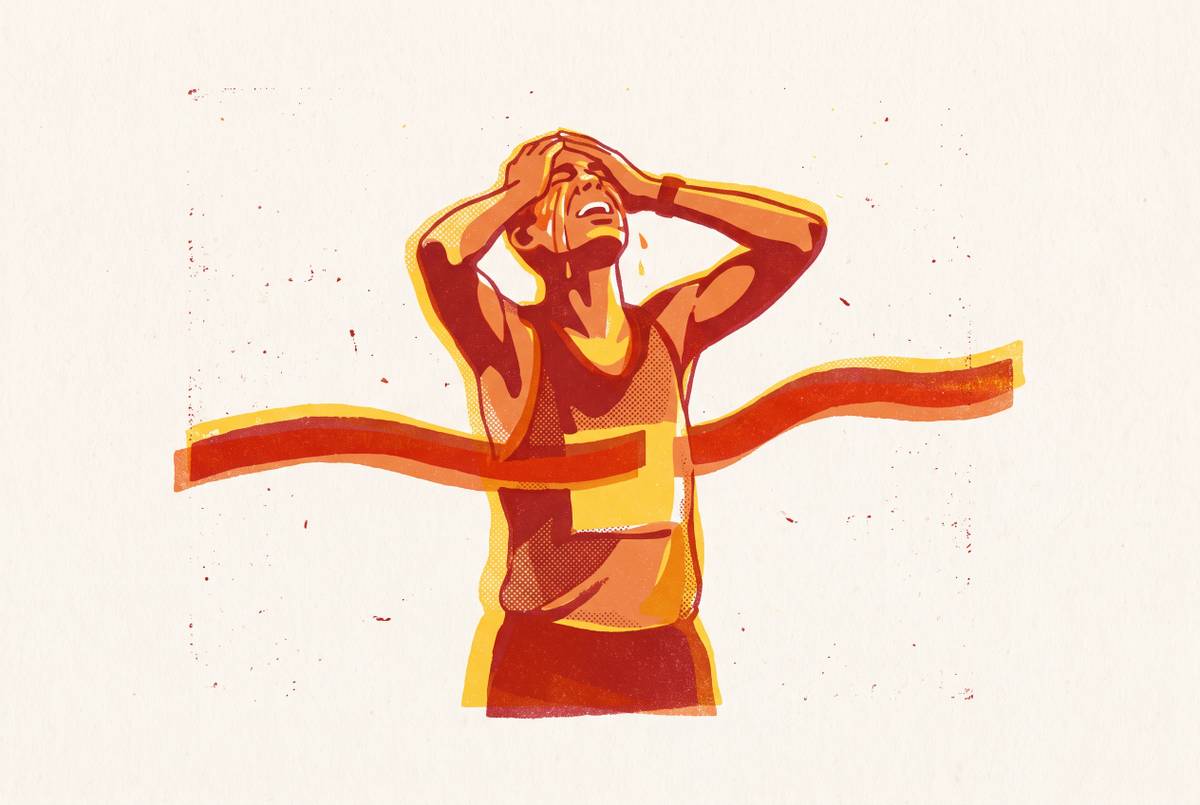
Finishing times function as status markers, easily compared against personal bests, against qualifying standards, against the times of friends who ran the same race. The ritual concludes with a medal that a runner wears that same day and displays at home for years afterward, making the finish line the hinge between the race as a single-day event and the race as a permanent piece of identity. Good Morning America frames finishing a marathon as a social signal of dedication, discipline, and time management, qualities that take months to build and that spectators recognize and affirm the moment they see a runner cross the line.
For spectators who know a specific runner in the field, the finish line produces something close to a proxy completion. They feel the relief, the pride, and sometimes the anticlimax on behalf of someone else, an unusual form of emotional labor that few other public events ask of the people watching them. For spectators who know no one in the race at all, the finish line still produces this response, because months of training are publicly legible on a runner's face and body in that exact moment, and that legibility is what makes empathy possible even between strangers.
The medal itself is the clearest material expression of everything the finish line represents. The 2026 Boston Marathon introduced a newly redesigned medal, golden on a blue and gold ribbon, manufactured by a specialty awards company. The redesign signals how seriously race organizers treat the medal as a ritual artifact rather than a token participation trophy, an object built to carry meaning for decades rather than to mark attendance for a single afternoon.
From Finishing to a Culture of Made Objects
The finish line does not end the marathon experience. It sets off a separate impulse, shared by runners and by the people who watched them finish, to translate that moment into something that lasts beyond the day itself.
The finisher's medal answers this impulse in its official form, but its generic nature, the same object handed to every finisher regardless of course, time, or personal story, leaves room for more specific alternatives. A cottage industry has grown around converting GPS data into commemorative art, built on the premise that nothing personalizes a finish quite like the race route itself. Using GPS data from a service like Strava produces a map of the runner's actual run, a visual record of every step taken across that specific course on that specific day.
Businesses like Mark Your Moment and My Adventure Maps operate in this space, using a runner's Strava or GPX data to build custom artwork out of the essence of a race route, whether that route belonged to a full marathon, a half marathon, a 10K, or a personally meaningful training run. Each print gets tailored to the specific route it represents. My Adventure Maps describes this kind of print as earning a permanent spot on a wall, and the company builds prints for any race a customer has completed, not only headline marathons.
Etsy's marathon embroidered category shows a parallel version of the same impulse working through fabric rather than paper. Listings span designs celebrating the 26.2-mile distance, custom race bib ornaments, vintage-style patches, and embroidered hats built for running clubs. The made-to-order structure of these products is what gives them their emotional pull. Buyers report receiving proofs before an order ships, and one recipient of a custom embroidered sweatshirt described the piece as the best part of the gift entirely. A listing titled "Embroidered Marathon Era Sweatshirt: Runner 26.2 Race Day Gift" captures the format well: personalized, made to a single order, tied specifically to the race identity of the person receiving it.
GPS art prints, embroidered apparel, and redesigned medals share a single underlying logic despite their different materials. The race that was actually run, its specific route, its specific date, its specific finisher, is the raw material each object is built from, and the object's value comes directly from that specificity. Mass production works against the purpose these objects serve. A medal or print that could belong to anyone belongs, in the end, to no one in particular.
Limited apparel drops as a launch moment for running culture
The same logic that drives GPS art and embroidered keepsakes extends into the apparel released around race weekends themselves, where limited runs of race-specific gear have turned marathon weekends into launch moments for running culture more broadly. A shirt, a jacket, or an accessory tied to a single edition of a single race carries the same specificity that makes a GPS print or an embroidered sweatshirt meaningful: it marks a date, a course, and a finisher's presence on it, in a way that a generic piece of running gear cannot.
Race weekends have become natural points around which this kind of product converges, precisely because so many people are already gathered in one place for one shared reason. The crowds described earlier, the million-plus spectators in Chicago, the 800,000 in London, are not only watching the race. Many of them are also runners themselves, current or future, browsing race expos and city storefronts for gear that will mark this particular weekend as distinct from an ordinary training cycle. The marathon weekend functions, in this sense, as both a civic ritual and a commercial one, each reinforcing the other's significance rather than competing with it.
What makes this convergence durable rather than incidental is the same principle running through the medal, the GPS print, and the embroidered sweatshirt: specificity is what gives an object its meaning. A jacket tied to one race, one year, and one finish carries weight that a generic piece of athletic wear never will, because it commemorates a day that a runner or a spectator actually lived through on a course they can still picture street by street.