When a Training Cycle Ends in a DNS or DNF
Months of training matter more than a single race day ever could.
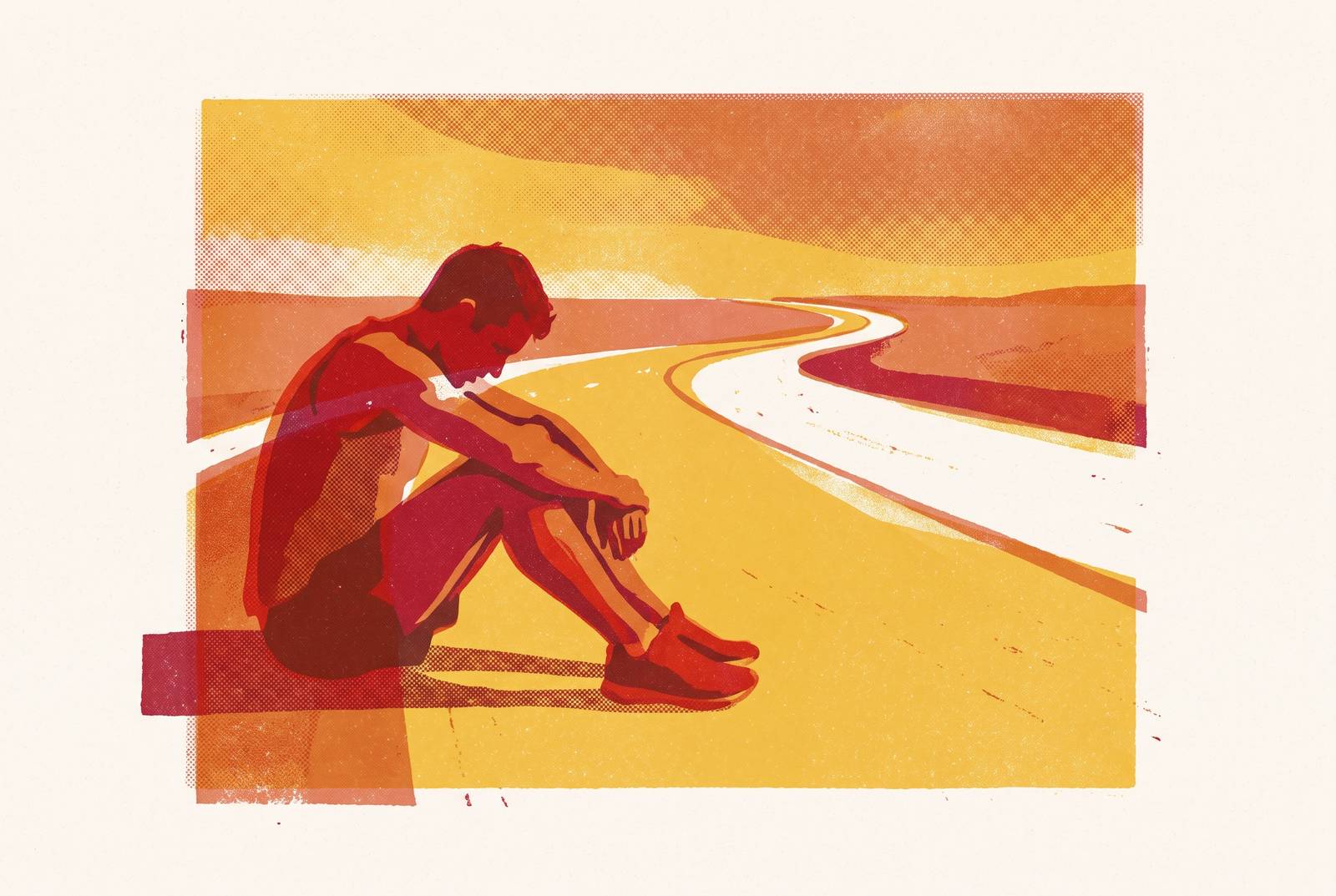
A DNS or DNF ends a race, but it does not end the thing that was actually built over the preceding months. The grief that follows is disproportionate to a single missed start or abandoned finish only if you measure the loss against one morning. Measured against a training cycle, the grief fits the loss exactly.
A DNS means the runner never reached the start line. A DNF means the runner started and could not finish. The distinction matters logistically, but Women's Running treats both as producing the same rupture, and RunToTheFinish is clear that both are decisions intelligent runners sometimes make on purpose, often to protect a body that was signaling something the runner needed to hear. The grief, in either case, has little to do with the specific mile marker where things ended. It has to do with what the runner had already done before that marker existed: months of daily decisions, structured around a date that, in the end, didn't deliver the ceremony those decisions were pointed toward.
How marathon training colonizes a life
Marathon training does not slot neatly into an existing life. It reorganizes the life around it, and that reorganization, not the race itself, is where most of the investment actually sits. A marathon on the calendar changes what time people go to bed, what they eat on Thursday nights, what they read before a long run, how they plan a Saturday months in advance. It becomes what the brief describes as a miniature life project, reaching into corners of daily routine that have nothing to do with running on the surface, while driving them underneath.
The texture of that reorganization is specific and, over time, oddly tender. Alarms get set earlier. Clothes get laid out the night before. A GPS watch gets charged on a schedule as reliable as brushing teeth. A playlist gets built for a long run in the rain, the kind of long run that exists in a runner's memory with more clarity than most ordinary days of that same season. These habits accumulate, week after week, into something that starts to feel almost romantic, a private relationship between a person and a goal that nobody else fully sees.
That relationship is not incidental to who marathon runners are. A 2024 narrative review of marathon runner personality found that runners show a strong sense of vigor, self-sufficiency, and intelligence, along with low scores in anger, fatigue, tension, and depression. Training is what sustains that profile over time, not a single race result. Research using the Motivation of Marathoners Scale, studying 906 first-time marathoners, found that newer runners train primarily for personal goal achievement, self-esteem, and health, while repeat marathoners train for reasons tied more to identity and community, with self-esteem mattering more for rookies than for experienced runners. None of that motivation resolves at the finish line. It accumulates across the cycle, in the small, often inconvenient choices that make the cycle what it is.
The commemorative gap when the race disappears
A finished marathon comes with a medal, a photo, a bib, an official time, and a culture built specifically to celebrate all four. A DNS or DNF comes with none of it, even when the work behind it was identical in scope and difficulty to the work behind every finisher around them. The sport's markers of accomplishment only activate at the finish line, leaving a structural gap for a runner at exactly the point that didn't happen.
Medals function as what the brief calls powerful mementos, able to trigger specific memories, the weather on race day, a training partner, the circumstances that made the finish mean something. They provide concrete proof of accomplishment that reinforces self-esteem. Without that object, the training cycle it was meant to represent has no physical form left to point to. The predominant feeling that follows a DNF is the sense of being unfinished, because one race doesn't erase a training cycle and one DNF doesn't erase the fitness that cycle built.
Non-runners tend to assume the marathon is the finish line. Runners know the finish line is a ceremony, a few hours that mark the end of a process that actually took months to unfold. When that ceremony doesn't happen, the transformation it was supposed to mark goes unwitnessed, by friends, family, coworkers, and often by the runner too, who has no object in hand to confirm the work that was done.
Grieving a DNS or DNF as the correct response
Grief after a DNS or DNF is a proportionate response to a real loss, and working through it fully is what allows a runner to move forward with the next cycle. Women's Running states the point directly: a DNF is a complete loss, and it should be acknowledged as one. Responses like "it could be worse" or "there's always next year" skip past the actual event and deny the runner the step of having the loss recognized.
RunToTheFinish frames the decision to stop, whether before the start or mid-race, as frequently the intelligent choice, protecting a runner's long-term racing future by avoiding an injury that could take months to resolve. That reframes the runner not as someone who quit, but as someone who made a difficult and correct judgment call under pressure. The same source notes that even a DNF takes a physical and emotional toll, and that runners need real recovery time before returning to intense training. The body registers what happened even when the mind wants to push straight past it into redemption mode.
Reframing what the cycle was for
The training cycle was complete before race day arrived. What the DNS or DNF interrupted was the ceremony at the end of it, not the work that preceded it. The fitness built across months of long runs, tempo sessions, and accumulated mileage exists regardless of what happened on one specific morning. That fitness doesn't require a finish line to validate it.
The 2024 marathon personality review notes that many runners, particularly younger ones, aim to run consistently for years and treat any single race as one chapter among many. In that longer view, a race is one chapter, and the training behind it stays part of the record no matter how the chapter ends. A 2021 study of psychological intervention in amateur marathoners found that the cognitive control, stress management, and capacity to sustain discomfort built through training are trainable skills that carry forward, not abilities that expire the moment a single event goes wrong. The value of the cycle was never concentrated at the finish line waiting to be unlocked by a medal. It was distributed across every early alarm, every logged run, every meal planned around a long effort the next morning.
The GPS file as the most accurate record of what happened
Every long run from a training cycle exists as a precise, recoverable record in GPS data, as geometrically exact as any official race course file, and often more personally specific, since it reflects a route the runner chose for themselves. Each session logged on Strava or Garmin is a data point in a record that exists independent of whatever happens on race day. The watch was running while the work was happening. The record doesn't depend on a result to be complete.
GPS-to-art tools that convert activity data into physical objects make no distinction between a training run and a race. The file from a twenty-mile long run completed two weeks before a DNS is as complete and exact as any official marathon course map. RoutePrinter converts GPS activity files directly into wall art prints, using the exact path the watch recorded. SketdUnique, sold on Etsy, builds personalized route map prints on Giclee art paper set into wooden frames, taking a runner's GPS route and turning it into minimalist wall art suited to a first marathon, a personal best, or a gift for someone else. Print My Routes goes further, converting GPS routes into three-dimensional topographic sculptures in PLA that capture the elevation and terrain of a run, hike, ride, or race, engraved on request with a name, date, or message. Pre-designed sculptures already exist for more than 500 iconic races and trails, including the Boston Marathon, Leadville 100, Hardrock 100, and Western States. The medal goes in a drawer and the bib gets folded away, but the GPS file remains the most accurate record of what a runner actually did on any given day, start line or no start line.
What a made-to-order keepsake offers beyond a medal
A made-to-order object built from a runner's actual route and training data does something a mass-produced finisher's medal cannot do: it makes the specific, individual work visible, rather than visible only as a generic symbol of having crossed some line. The embroidery market built around runners shows this at the level of craft. A framed embroidery sold on Etsy renders the Chicago Marathon route in red stitched thread, with text reading "CHICAGO MARATHON" and the date October 11, 2026, a piece that functions simultaneously as a map, a keepsake, and a textile object, carrying a physical depth and visible labor time that a printed image doesn't have. A Custom Marathoner Sweatshirt, also sold on Etsy, pairs a blue garment with white embroidered text reading "MARATHONER CHICAGO 2026" on the chest and a laurel wreath with 26.2 and the runner's name stitched into the sleeve cuff, and it carries a substantial volume of reviews, evidence of how much demand exists for personalized commemoration of this kind.
Amsterdam-based maker LineaMachina works in pen-plotting, a process that takes considerable skill and up to several hours per piece, producing work that goes beyond a simple print because the making itself takes visible time. The same principle applies directly to embroidery: the hours a maker spends are part of what the object means. The New York Road Runners' 2025 Holiday Gift Guide features the official TCS New York City Marathon jewelry collection by Erica Sara, described as handcrafted and made to order, personalizable with a monogram, a meaningful date, an empowering mantra, or a finishing time, an endorsement of the made-to-order commemorative model from one of the sport's own organizing bodies.
For a runner who didn't finish, or didn't start, this category of object carries more weight, not less. The finisher's medal isn't available. The training record is complete. A made-to-order keepsake built from that record gives the cycle the witness it was denied on race day.
Giving a keepsake after a DNS or DNF
Giving someone a commemorative object after a DNS or DNF says something specific: the work happened, and nobody needs a finish line to prove it. The logic that governs commemorative gifts generally applies here with unusual force. A gift fits when the race itself carries the story, a first marathon, a comeback from injury, a Boston qualifier, and a DNS or DNF is exactly that kind of story, one where months of preparation are the substance of what happened even though the race day result never arrived.
Non-runners often freeze after a DNS or DNF because the cultural script for marathon celebration runs entirely through finisher's medals and finish-line photos, and neither applies. A made-to-order object built from the runner's actual GPS data gives a friend or family member something concrete to hand over, without needing to find the exact right words. Women's Running names the worst possible response directly: "it could be worse," "there's always next year." A keepsake built from the training itself argues the opposite position, that this specific cycle, this specific effort, deserves to be remembered on its own terms, not folded quietly into whatever comes next.
Timing shapes how the gesture lands. A keepsake given before the next race registration, or during the recovery window when there's no new goal yet to redirect attention toward, acknowledges the cycle that just ended rather than rushing past it toward the one still to come.
What the training cycle deserves to be remembered for
The training cycle's claim on memory was never tied to what happened at the start or finish line. It rests on what was actually done across the weeks and months that came before either one.
Not everyone who starts a marathon finishes one, and no one who finishes one knows for certain they'll get to run another. The training cycle's value holds regardless of what race day delivers, and waiting for a finish line to mark that value risks leaving it unmarked. The GPS file from the last long run of a cycle stands as a complete artifact: the exact path, the exact terrain, the exact effort, logged and ready to be recovered at any point afterward. The weeks on either side of that file are the evidence of what a runner was becoming during that stretch of months. A keepsake built from that data doesn't carry a result. It carries a record of the work itself, which was finished long before race day ever had the chance to interrupt it.