Logging Miles and the Runner's Relationship With Training Data
GPS watches turned running into quantified self-discovery that matters long after the race ends.
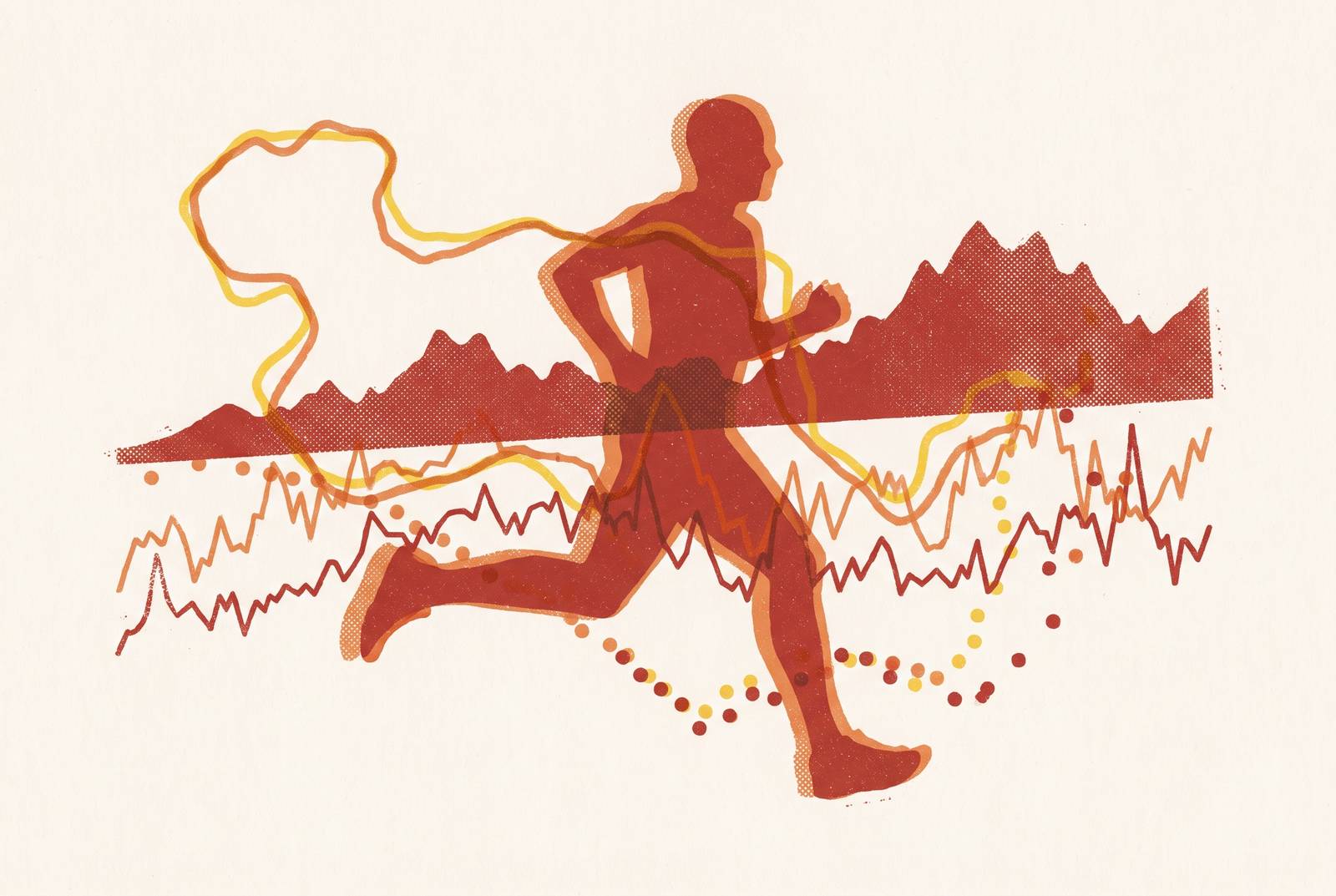
A runner finishes her marathon in late October. Three weeks before race day, she had logged a 20-mile training run that felt unremarkable at the time, nothing worth revisiting. Now, medal around her neck, she opens that old entry and reads the splits again because she wants to see it. That instinct is the puzzle this piece sets out to explain. Most runners who wear a GPS watch do not stop logging when training ends. They record easy shakeouts, recovery jogs, and off-season miles with the same consistency they bring to peak-week workouts, and optimization alone cannot account for that behavior, since there is nothing left to optimize once the race is run. The GPS watch has become the default training instrument for serious distance runners rather than a specialist accessory: the Strava device leaderboard, described as the closest thing the running world has to a global running-watch census, shows adoption has moved well past early adopters. What those devices capture has also expanded far past pace and distance, into heart rate variability, sleep quality, training load, and elevation, so a runner's log is now a layered record of how the body responded to each session, not just what the legs covered, which raises the question of why that record keeps getting reviewed long after its practical use has expired.
The training log as a record of weeks
Marathon preparation has a shape. It runs for months, builds in stages, and demands a kind of patience that no single run can demonstrate on its own, so the log becomes the only place that shape is fully visible. Logged weekly mileage during marathon preparation is one of the strongest predictors of race-day finishing time, an analysis of data from over 100,000 marathon runners found. Those numbers in the log are not just records. They are evidence that the work was done, week after week, in a way no single memory can replicate with the same precision. The taper phase sharpens this point. A runner who has followed the arc correctly arrives at race week with a log that shows the buildup complete, and the data functions as a receipt for the preparation itself. Self-designed plans often tempt runners to cram hard workouts and high mileage into the final weeks, a pattern that corrupts the arc the log is supposed to document. Running coach John Davis has described the taper not as a distinct phase but as a continuation of the training rhythm, culminating in the race: the marathon should feel like one more big weekend session, except longer and more focused. That framing matters because it means the log doesn't end at the start line. It carries the rhythm of the whole buildup into the race itself, and the race becomes legible only in light of the weeks that came before it.
What running does to identity
The training log functions the way a journal does, externalizing an internal experience so the runner can return to it later. Running is integral to identity for three-fourths of highly experienced ultramarathon runners, aiding in self-fulfillment and contentment with individuality. That statistic reframes what the training log actually is: not just a performance file, but a record of a self the runner has been building over months. Long-distance runners frequently use running as a cathartic behavior, moved by intrinsic motivations such as personal achievement and psychological health, motivations served less by optimizing the next run than by the ability to look back at what was already done. Research among runners at a major race found that all respondents reported the need to experience strong emotions, feel unity and integration with others, and test themselves as very important, and those social and emotional drives are what the data, shared on platforms like Strava or Garmin Connect, helps runners express and confirm. The Marine Corps Marathon's official blog makes a related claim explicit: running is a way to locate ourselves in space and in time. Each footstep traces a personal map, making each mile and marker a landmark of a journey through the world. That is the emotional logic behind why runners return to old logs. The data isn't historical trivia sitting untouched in an app. It stands as evidence of who the runner was becoming during those weeks.
Pre-run rituals and the act of logging
Rituals work because they build strong associations. The brain learns that a specific sequence of actions leads to running and begins shifting mental state automatically toward the focus the run requires, and pressing "start" on a watch belongs inside that sequence for most GPS-watch runners. Stopping the watch at the end of a run, then reviewing the summary, closes the ritual. The data review is the runner acknowledging that the run happened and that it counted, a small act of confirmation. That explains why runners who occasionally run without their watch often describe the experience as incomplete. The data was not what they needed. The ritual was what got broken, and the discomfort that follows has nothing to do with lost splits. Pre-run rituals reduce decision fatigue and shift mental state automatically toward readiness, and the watch operates inside that system as a trigger. The log that results is its residue, left behind once the ceremony has run its course.
The finish line as the moment when the data's meaning crystallizes
Completing a marathon is a journey defined by discipline, by pushing past physical limits, and by working through moments of doubt that accumulate over months. The training log is the only complete record of that journey, because the race itself lasts a few hours while the preparation lasts months, and nothing else holds the full arc in one place. Every finisher receives the same medal, regardless of pace or preparation, so the external marker of completion carries no information about the path that led there. That uniformity is precisely why runners place such weight on the internal record: the log is the differentiator, the proof that the road to the start line was uniquely their own. All respondents at a major running event reported the need to experience strong emotions and test themselves as very important, and those emotions, felt in the hours after finishing, reach back through the training log and charge every entry with a significance it did not carry when it was first recorded. Consider the runner who struggled through a 20-miler in week fourteen and logged it anyway, expecting nothing from the entry beyond a number. After finishing the race, that runner reads the same entry differently: it was the day the marathon was decided, long before the starting gun. The modern finisher medal has become a complex piece of art, a prized item that tells a story on its own terms, but the medal captures only the day. The log captures the months. That gap, between what the medal holds and what the log holds, is the emotional opening for commemorative keepsakes that go deeper than a medal ever could.
From training file to keepsake
A concrete and expanding category has emerged where GPS data is translated directly into visual art, and for runners, GPS route art is a sweet spot between performance and memory. It preserves the geography of the effort and turns the route into something that can be framed, gifted, or displayed on a wall. On Etsy, the category is well established and spans multiple formats: a personalized marathon map built for any race, confirmed by thousands of sales; a 2026 Brooklyn Half Marathon custom map print; a personalized Boston Marathon route art print; and an embroidered race map, a framed embroidery on light fabric featuring a red stitched map of the Chicago Marathon route, dated October 11, 2026, complete with embroidered icons of a sailboat, a Ferris wheel, a train, buildings, and a hot dog. Mark Your Moment has built official partnerships with major events, offering an official Nike Melbourne Marathon print from 2025, official Sydney Marathon 2026 prints, and Vienna City Marathon 2025 prints. The path from a raw route file to a digitized stitch pattern to a finished textile is now technically accessible, requiring no specialized skill from the runner beyond the willingness to upload the file. These products stand as proof that other runners have already acted on the same impulse this piece has been describing: the pull to preserve a GPS record as something more durable than a line on a training app.
Why the training weeks belong on the keepsake
Commemorative gifts fall into two broad categories, utility and commemoration, and the best commemorative gifts help runners remember not just the city where they crossed the finish line but what the preparation actually cost them. A race route traces the distance run just once. The training log holds what that route cannot: the weeks of accumulated mileage, the total runs, the long days that didn't feel like anything until later proved otherwise. A keepsake built from that fuller data, rather than from the race GPS trace alone, tells a truer story of what was earned over months of work. Embroidery carries particular weight as a storytelling medium: designers use stitches to communicate personal stories and cultural identity, and needlework motifs depict significant occurrences and philosophies, turning cloth into a canvas for emotional articulation. That makes it a natural vessel for a record that is both personal and physical. Personalization now shapes embroidery trends broadly: in a world that thrives on mass production, the urge for personalized goods has only grown, and a keepsake drawn from a specific runner's own GPS data sits at the opposite end of that spectrum from anything mass-produced. The made-to-order model, where nothing gets produced until the runner approves the proof, matches how runners already think about their training: deliberate, verified, and irreversible only once they're ready to commit.
Wearing the training, not just remembering the race
The marathon finish line ranks among the most emotional moments in a runner's life: pride, exhaustion, disbelief, a kind of joy that only comes from pushing past a limit the body insisted was fixed. Those emotions belong to a journey that started months earlier, and the data has been tracking that journey the entire time, every recovery jog and every stalled Tuesday run folded into the same file. A keepsake that lives in a drawer captures a single day. One that returns to the body on the next long run brings the runner back to the feeling that made the original effort worth logging in the first place, because the training was never preparation for something else. It was the thing itself, mile by recorded mile. The strongest gifts in the commemorative category help runners remember and carry a specific experience: not generic celebration, but the particular race, the particular person, the particular weeks that got them to the start line. The numbers in a training log are evidence of a decision made hundreds of times over months, the decision to keep going when the run offered no reward beyond itself. That same impulse, the one that keeps a runner logging miles long after the season has ended, is what makes a keepsake built from that data feel like something other than a souvenir: a runner laces up on an ordinary morning, watch already running, carrying the record of what she has already done back out onto the road.