The Ultramarathon First Finish as a Category of Its Own
A first ultramarathon finish deserves recognition as its own kind of achievement.
A first ultramarathon finish is a category of achievement in its own right. Its significance comes from the preparation absorbed into one day, the psychological work of continuing, and the ground shared with every other finisher. The finish is therefore more than a performance result. It is a life event whose particulars deserve to be remembered.
Why the first ultra finish belongs in a category by itself
The marathon has a familiar cultural script. A runner trains for a pace, crosses the line, and answers the question of how long it took. The number makes what the runner has done easy to grasp, even when there is more to the experience than the time. In a first ultra, that relationship is inverted. The result belongs within the story of finishing.
That distinction changes the standard by which the achievement is understood. Pace and position still matter in racing, but neither tells the whole story of what a first-time ultrarunner has done.
How ultramarathon training differs structurally from preparing for any other race
Ultra training changes what a runner optimizes for. Time on feet and accumulated fatigue take priority over pace-based mileage targets, shifting attention from speed over a known distance to sustained effort under changing conditions. Trail surfaces, elevation, and technical terrain make that distinction concrete. A pace that means one thing on a road cannot describe the same effort across those conditions. Training includes learning how to move through them as well as spending more time on a familiar run.
That change also gives strength a different role. A stronger body is better prepared to withstand the demands that arrive late in an ultra, when the task is still to move effectively over the course. Endurance is not only a question of aerobic preparation. It includes the physical capacity to keep working through terrain after substantial fatigue has accumulated. Training therefore addresses the conditions of continuing as well as the distance to be covered.
Reducing volume in the weeks before the race can create anxiety because less running appears to contradict the work that made the runner ready. Yet the reduction removes accumulated fatigue while preserving fitness. The distinction is simple but difficult to inhabit. Preparation ends not with one more demonstration of endurance, but with allowing the body to arrive without the full burden of the training block.
What months of ultra training actually accumulate into before the start line
Training for a first ultra begins at least 16–20 weeks before the race, and earlier for runners who have yet to build a weekly mileage base. Those weeks are already a substantial experience. They require time to be reorganized, nutrition to be adapted, and health to be managed while the runner works toward an unfamiliar demand. The race gives that history a point toward which all those changes have been directed.
Gorichanaz (2015) describes ultrarunning as a serious leisure pursuit. Kazimierczak et al. (2020) similarly place participation within a framework distinguished by perseverance, ethos, and subculture. Consulting experienced runners means entering a body of shared knowledge while learning what the event will require. By the start, the runner has completed months of workouts and taken part in a different way of planning and putting in effort.
What to eat at hour four, how to walk a grade without losing time, and how to manage blisters at night are no longer remote possibilities. They belong to the runner’s preparation for a specific day. Starting may look simple, but behind it are hundreds of small choices, each tied to time already spent and doubts already thought through. The finish eventually resolves that investment, but the weeks themselves cannot be reduced to a preliminary stage that disappears once the race begins.
The psychology that separates ultra runners from every other endurance athlete
The psychological distinction concerns the purpose of the effort. A narrative review in Psychology Research and Behavior Management identifies psychological goals, self-esteem, and meaning of life as primary motivations reported by ultramarathon runners. Personal exploration also forms part of the ultrarunning experience. These motives place the runner’s internal relationship with the event near the center of participation. The achievement is significant partly because of what the runner hopes to understand or establish through it.
Akbaş & Waśkiewicz’s 2025 comparative study in Personality and Individual Differences makes that difference clearer. It associates marathon runners with psychological coping, recognition, competition, health orientation, and weight concern, while ultramarathoners emphasize life meaning and psychological coping. There is overlap, notably in coping. Ultra participation cannot be explained simply as a more intense version of the same ambitions.
The sport’s subculture can reshape how runners understand themselves, rather than changing only their assessment of their fitness. Preparation, shared knowledge, and perseverance become parts of that understanding. For a first-timer who seeks meaning and self-exploration, finishing answers something that a training plan alone could not. The line marks the completion of a race, but its personal consequence reaches beyond the result.
How elites and first-timers share the same course and what that does to the finish line
An elite runner and a first-timer enter the same terrain. They face the same course cutoffs and aim for the same finish line, even though they will reach different parts of the route at different times. In the shared darkness of an ultra start, that common undertaking is unusually clear. Ability changes the speed of passage, but not the ground that must be covered. The first-timer’s effort belongs to the event itself.
Western States race director Craig Thornley describes a community that “revels in each other's successes”. Aid stations are not only places where individual runners attend to their needs, but places where support crosses differences in ability. Finishing together can be as significant as finishing fast. Runners still compete, and those away from the lead earn recognition too.
The consequence becomes concrete at Western States or Leadville. A first-timer crosses the line that the elite crossed hours earlier, having run the same course in full. The distinction in performance is real and visible. Yet the shared route supplies another basis for recognition, one grounded in what each finisher had to negotiate. For someone completing an ultra for the first time, the finish joins a personal breakthrough to an achievement understood by others through the terrain itself.
Why the first ultra finish line is an event, not a time
At the first finish, months of preparation meet an answer. The runner has brought an identity-forming commitment through the course and reached the endpoint shared by the other finishers. A recorded time locates that completion within the race, but cannot contain its personal significance. The first crossing is unrepeatable in a precise sense. Later finishes may be faster or better, but they cannot bring back the doubt of a runner who has yet to find out whether they can finish an ultra.
Runners describe how they managed the lows, what they ate, which aid station had the best energy, and what went wrong. Those details explain the passage from starting to finishing in a way that elapsed time does not. What the runner learned also remains part of the account.
There is an apparent tension in treating such an experience as something to commemorate. Ultra culture places enjoyment of experience above accomplishment and often resists trophy-seeking or external display. A runner can be indifferent to the medal. That indifference does not erase the training months, the route through the mountains, or the moment when continuing finally became completion. The purpose of remembrance can be to preserve what happened in the experience.
How the ultra community marks the finish, from race traditions to personal commemoration
Western States 100 has its own way to give finishers something to keep. Finishers who meet its faster qualifying threshold get a silver belt buckle, while those who finish after that threshold but before the final cutoff get a bronze belt buckle. The award is tied to completion under defined conditions. Its material form connects recognition to the demands of a particular race.
The race-level object records an achievement within the event’s tradition, while a made-to-order object can record the particulars of one runner’s completion. A finish time, date, and completed course become available together only after the run has happened. The object follows the experience. Its specificity comes from those recorded details rather than from a general claim that the owner is a runner or a finisher.
GPS and GPX route data allow that specificity to become visual. Prints and relief maps can render the runner’s actual route, giving the passage through mountains or forest a form that can be kept and revisited. The route is more than decoration in this setting. It shows the exact line associated with the completed effort, something a standard race medal cannot depict for an individual runner. Personal commemoration therefore extends the race tradition without needing to imitate its award.
Giving a first ultra finish something to show for itself
For a first ultra, the strongest keepsake is grounded in particulars. The route, place, date, and result distinguish one completion from a generic endurance achievement, while the training gives those details their weight. A personal object can leave some of the hard hours untold. It needs a truthful connection to the run that gives it meaning.
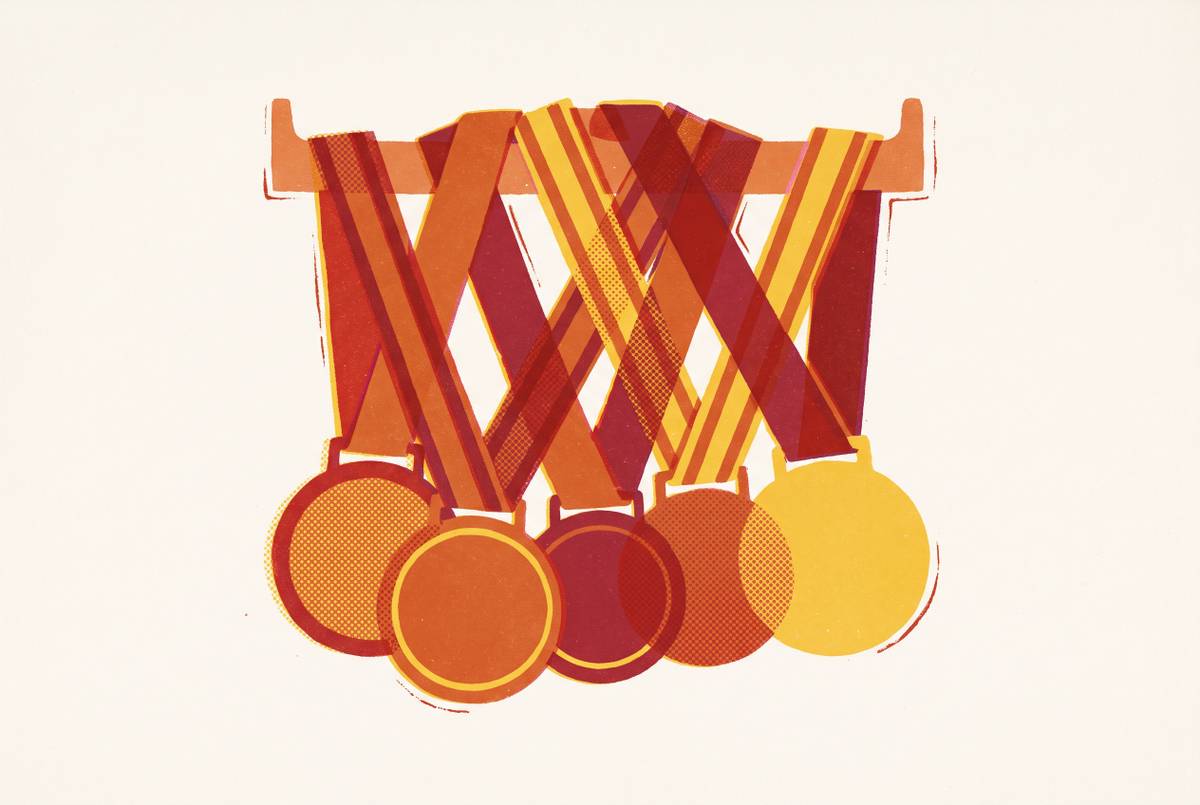
Personalized runner gifts offer several forms for that connection, including embroidered finisher sweatshirts, GPS/GPX route map prints, custom ornaments, personalized route map posters, medal display frames, and embroidered towels. Each places the memory in a different setting. A route print makes the course visible, while a frame gives the race medal a place beyond the day it was received. Embroidery offers something tactile, durable, and wearable.
A made-to-order embroidered runner gift crewneck illustrates the distinction. A finish time stitched into the sleeve, paired with the race date, depends on a result that exists only after completion. The number serves a different purpose here. It names the event being remembered without being the only measure of what it was worth. In the same way, a route map can preserve the terrain through which the runner’s preparation was tested without reducing that preparation to a performance ranking.
The giver may be the runner or someone close to them. In either case, details of the run make the object a keepsake that recalls what happened. The training, route, and place supply its meaning. For a first ultra finisher, that is the appropriate relationship between the achievement and what remains on a wall, in a frame, or stitched into a sleeve.