The Psychology of Reviewing a Race GPS Track
Runners trace their GPS tracks to emotionally relive the struggle.
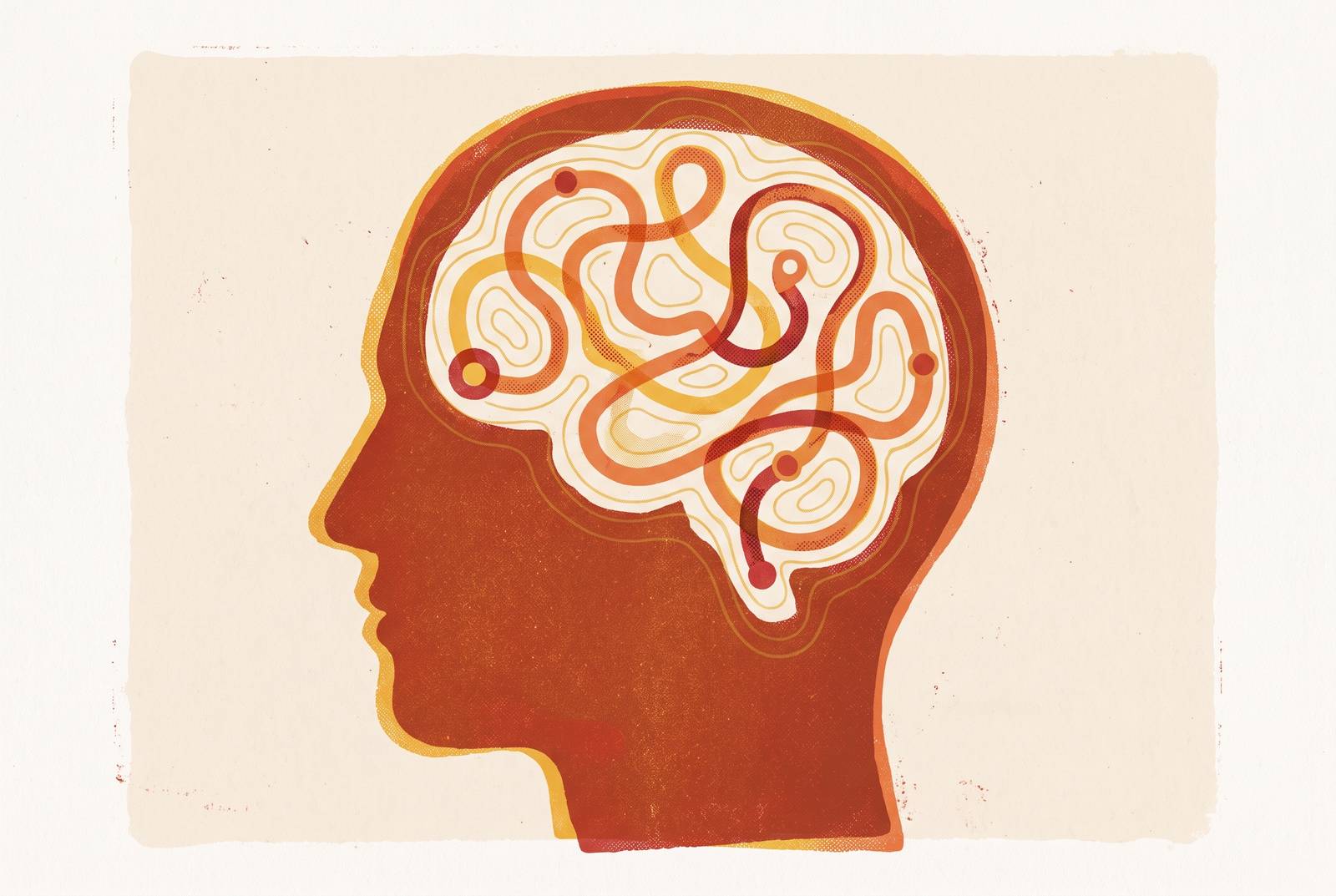
Reviewing a race GPS track is a form of emotional re-entry, allowing the runner to revisit a difficult experience from the safety of a screen.
Why the GPS track feels like more than a map
An hour or a day after finishing, a runner holds a phone or opens a laptop and traces the race route again. The line is already familiar, and the result is known. Yet the runner follows its turns instead of just checking the finish time and closing the screen. The attraction is the chance to return to places that now carry the weight of having passed through them.
A GPS track offers something different from a pace chart or a heart-rate graph. Those records describe aspects of performance in abstract form, while the track shows where the body went. Its shape gives the experience a physical outline, mile by mile and turn by turn. A section of the route can therefore stand for more than a location. For the person who ran it, that section also belongs to a particular stage of the effort.
The runner is looking at a record of movement, but the significance lies in the experience attached to that movement. The map remains geographically simple even when what it recalls is emotionally complex. Its pull comes from the distance between how little it shows and how much the runner knows it contains.
What marathon running does to a person psychologically, and why the experience demands a record
The weight carried by that line begins with the unusual compression of a marathon. Months of preparation lead to hours of suffering and then to one crossing of a line. Physical extremity and internal struggle unfold together, leaving little room to consider the whole experience while it is happening. Harris describes every facet of the mind being pushed to its ultimate test, with internal struggles throughout the course. The sense of pure accomplishment at the finish is correspondingly rare in sport.
The race is complete as an athletic task before it has necessarily been understood as a personal experience. Wang et al. (2025) cite Robinson et al., 2014, in describing marathon participation as a multi-dimensional social and emotional experience with symbolic, ritualistic, and affective dimensions. A record gives the runner something stable through which to return to those overlapping meanings.
The experience also bears on the runner’s sense of identity. Lorin Braschler and colleagues’ narrative review describes a distinct personality profile among marathon runners, including strong vigor, self-sufficiency, and intelligence, with low scores in anger, fatigue, tension, and depression. These traits are both selected for and reinforced by the training process. That helps explain why reviewing a GPS line can affirm an identity. The runner is revisiting an experience that expresses the person the preparation required them to become.
How the GPS track replays the emotional arc, not just the route
Each segment corresponds not only to geography but also to a moment in the internal struggle. Following the route restores the order in which those moments occurred. The start belongs to anticipation, the hardest miles to the peak of the struggle, and the finish to accomplishment.
A finish time tells the runner how long the race took, but the track leads them through the feelings they remember. Its beginning, middle, and end provide a narrative structure that the mind can enter again. The value lies in the passage between those stages. The accomplishment feels so strong because the route brings back the struggle that came before it.
The runner now knows how the story ends. The suffering remains real in memory, but the hard miles no longer threaten the outcome, allowing the accomplishment to be felt more cleanly. The screen separates the remembered effort from the demands of being on the course.
The line can also serve as documentary evidence of a promise kept. Tatyana McFadden says, “Everyone is running for something, running for some cause”. For a runner motivated by a personal milestone, grief, or a cause, completion means more than a recorded performance. The route is proof that the intended act was carried through. Reviewing it connects the emotional sequence of the race with the reason for undertaking it.
The objection worth taking seriously: should the training log be the real artifact?
Geher’s objection challenges the choice of what deserves commemoration. The race is the glorified moment, while the training is where the sustained work happened. A keepsake of race day can seem to give more weight to the finish people see than to the long training that made it possible. On this account, the training log is the more substantial record because it records the work done over and over before that work gets its moment of praise.
Xiuxia Liu and colleagues’ 2025 longitudinal study gives this objection further weight. Their study of a runner who completed 119 marathons found that motivation shifted over time from external achievement toward legacy and intrinsic value. A study of one runner cannot show that everyone changes in the same way. Nevertheless, it supports the possibility that, for an experienced runner, accumulated practice shapes motivation more strongly than any single event. A race track need not be the most important artifact of every running life.
The race track is not instead of the training, but what the training becomes on race day. By then, the GPS device has already recorded weeks of precursor efforts, making the race the final chapter of a story written through preparation. Wang et al. (2025) describe running a marathon as taking months of personal planning, perceived self-efficacy, and motivational resilience. The decision and the effort begin long before the start, so the finished route can stand for their culmination without claiming to replace their record.
Why the GPS line becomes an artifact — and what runners do with it
Once the race track is understood as a culmination, the impulse to make it physical becomes easier to explain. Runners and the people who love them seek an object that gives the experience weight and permanence beyond a screen. The route is useful for this purpose because it already has a recognizable form. The athlete’s own line can be at the heart of the object.
The market for GPS-to-art conversion reflects that preference. Custom running maps work with Strava, Apple, Garmin, and other GPS trackers, drawing their data from the athlete’s own device. They are available as prints or framed prints, while other sellers separately offer three-dimensional topographic relief maps. One Etsy seller states the intention directly. “Created using your GPS route, each map captures the exact course and transforms it into elegant, minimalist wall art. Whether you're marking a first marathon, a personal best, or gifting something thoughtful to a runner you admire, this custom route map is designed to reflect the dedication, effort, and significance behind the achievement.”
Mark Your Moment offers official licensed prints for events including the 2025 TCS Sydney Marathon, the Vienna City Marathon 2025, and the 2026 ASICS Gold Coast Marathon. The prints are personalized with the athlete’s name, race number, distance, finish time, and date. These details make an image of the event a record of what one person achieved by taking part. Their significance is not simply decorative, but commemorative.
What embroidery adds that a print cannot
A print reproduces the route on a flat surface, while embroidery constructs it stitch by stitch. The line acquires dimensionality through the material used to make it. That gives the route a craft presence that a flat print does not have. How each medium makes the record physical does not imply that one carries more personal meaning for every runner.
The time required introduces a productive paradox. GPS data is real-time and digital, ready within seconds of finishing, while an embroidered version of the route may take days to make. In the digital record, immediacy is part of the function. In the embroidered object, delay makes room for reflection and gives the translation a different weight. The route has already been captured, so the later work is not about recording it faster but about making it permanent in another form.
Finished embroidery pieces are explicitly listed as made to order, meaning that each exists only after a buyer specifies their data. The particular track is therefore a condition of making the piece. No two GPS tracks are identical, and their embroidered versions preserve that specificity.
Why the track is worth keeping, and who deserves to keep it
A track is worth keeping because it holds the shape of a hard thing done, its meaning grounded in the effort that preceded and filled it regardless of whether the result demands public recognition. This is why the claim extends beyond a first marathon or a personal best. The record can matter whenever finishing means something to the runner. The people closest to the runner may understand that weight as acutely as the runner does.
Matt Llano describes the breadth of experience brought to a starting line. “You see just so many stories of triumph, and people who've gone through so many different things to get there on that day … it just makes you think back on your own journey and what you have overcome to get to that starting line. Everybody has something, whether they think they do or not.” A person who was not on the course can still understand what it took to reach it.
Every finisher gets the same medal, but the GPS record belongs to one course, on one day, reached through the weeks spent preparing for it. Making that line physical preserves a different kind of distinction from the one the medal supplies. It gives lasting form to the experience the runner returns to when tracing the route on a phone or laptop. As a gift, it can also acknowledge the cost of that experience without needing to explain every mile. The runner recognizes the effort in the line, and recognizes in the person giving it someone who understands why that effort matters.