What Makes a Finisher Medal Worth Keeping
The months of training matter more than the finish line itself.
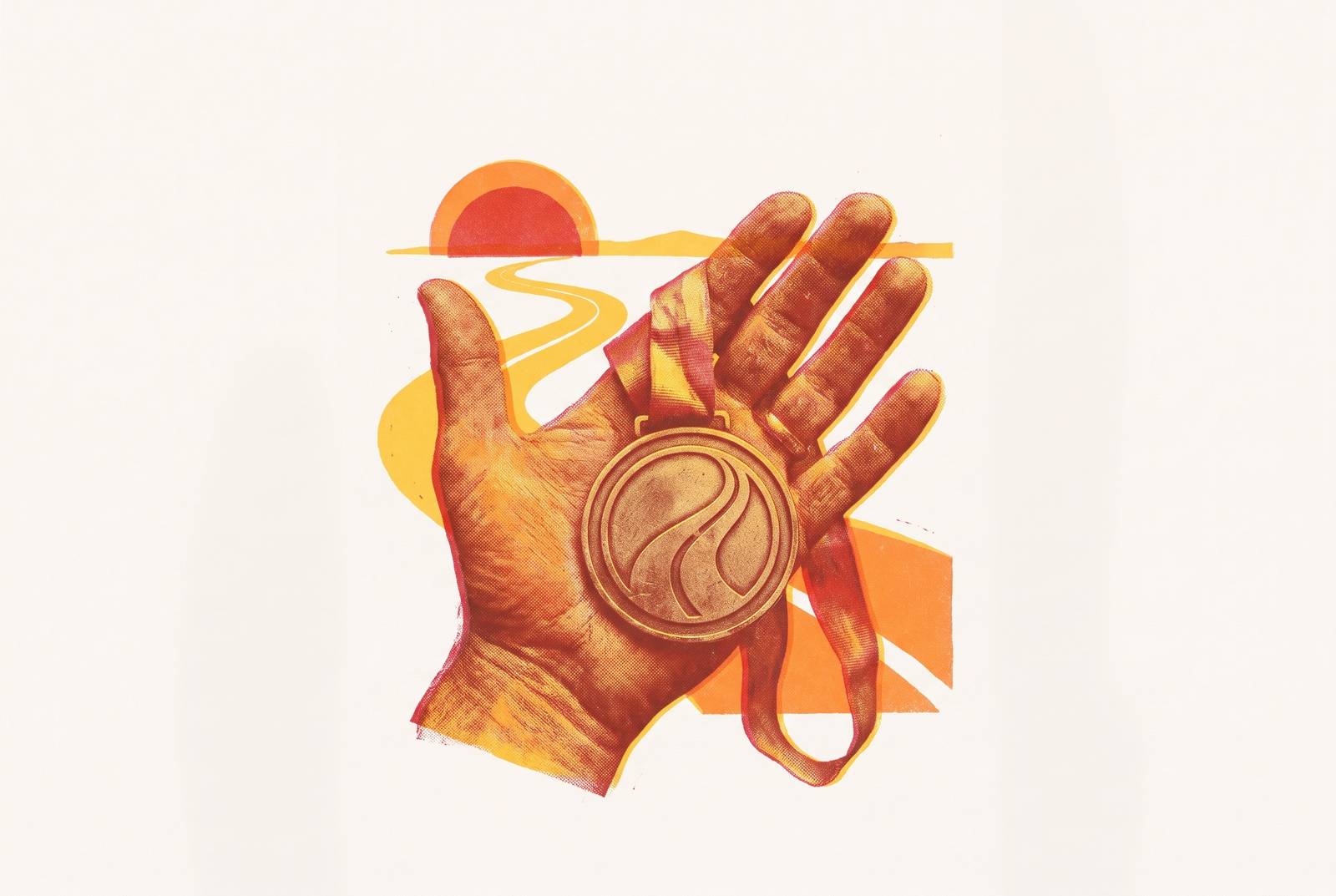
A finisher medal is worth keeping when it reflects the effort behind the finish. For someone who has completed a first marathon, a strong personalized gift is GPS route art drawn from their actual run or made-to-order embroidered apparel recording their name, race, year, and distance. The best choice preserves something specific to that runner, whether it is the course they ran or the training that made it possible.
Why a finisher medal is structurally different from any other trophy
A cup or podium award marks where a runner placed, while a finisher medal marks that they finished. If everyone who crosses the line receives one, what makes any particular medal worth keeping? Ranking cannot supply the answer because the object makes no claim that its recipient outperformed another runner. Its value rests on a different foundation. The medal marks an achievement whose significance belongs to the person who earned it, even when its design is shared with every other finisher.
What runners are actually commemorating when they cross the finish line
The race takes a few hours, but getting to its start line takes months of work. Recreational marathoners usually train three to six days per week for many weeks. The finish is only the visible endpoint. Geher’s framing puts the emphasis on the preparation, treating the buildup as the achievement that deserves recognition. On that reading, the medal arrives at the end of a sustained practice.
That practice also gives the finish its personal context. Running a marathon can give people meaning and purpose and help them grow, but an event name or date does not show those gains. Two runners can cross the same line after very different preparations and for very different reasons. Their medals rarely show that difference. The central difficulty of race commemoration is therefore one of representation, finding a way for a small object to reflect work and purpose that were largely invisible to everyone except the runner.
How race organizers use course geography and local identity to give medals more to hold
New York Road Runners links the 2026 TCS New York City Marathon medal to the course with an abstract sculptural skyline and the five iconic bridges runners cross along the 26.2-mile route. Those features connect the object to the journey through all five boroughs. The bridges are more than local decoration. They are recognizable parts of the route the runner completed, giving the design a physical correspondence with the effort it marks. A runner can point to a feature of the medal and connect it to a place their body actually went.
The 2025 TCS London Marathon takes a related approach, engraving the medal’s reverse with a stylized map highlighting Cutty Sark, Tower Bridge, Big Ben, and Buckingham Palace. Here, the medal becomes a miniature course map that a runner can trace with a finger. Place gives memory a concrete reference point. Neither approach depends on treating one city’s design as better than another’s, because the useful distinction is between course-specific detail and a generic distance symbol. A laurel-and-distance design can identify the achievement, but it cannot locate it with the same precision.
How some medals try to capture time and history, not just geography
The New York medal adds a historical layer to its geographic one, commemorating both the 50th anniversary of the five-borough course and 50 years of finisher medals. NYRR began with 26 initial ideas and spent a full year refining the design before production. Made of zinc with an electroplated gold finish, the medal is 3.5 inches wide, slightly larger than the 2025 edition to mark the milestone. The runner gets a medal designed to stand out from those of the years around it, giving this edition its own form.
NYRR describes how the medal has changed over five decades from a simple round coin into a piece of sculptural jewelry. The anniversary edition is positioned as a keepsake of that longer development, giving its recipient a place within the event’s history. The Bronte Harbour Classic 2026 organizing team applies the same logic from the opposite end of a race’s life, framing its inaugural medal as a collector’s item whose “Year 1” context gains significance over time. Both approaches mark a moment that cannot recur. An anniversary or inaugural edition, however, confines that story to the race’s shared history.
What NFC chips and embedded data add — and where they stop
The 2026 Yulin Marathon medal has a Twenty-Four Solar Terms dial and an NFC chip that lets runners see their own results by tapping the medal with a smartphone. The 2026 Changning Shunan Bamboo Sea Half Marathon medal also has a built-in NFC smart chip that shows finishing results and course footage when a smartphone is brought close. The latter follows the principle of “One race, one feature; one medal, one memory,” joining event identity with access to a runner’s record. The medal gains a substantive function as a point of access to information that its physical design alone could not contain.
Access, however, is different from visible personalization. A runner can retrieve their result, but the object hanging on the wall still looks like the medal awarded to other finishers. A nameplate moves the personal detail onto the object itself, making the connection to its owner legible without a scan. The two approaches serve different purposes, with one opening a digital record and the other identifying the recipient at a glance. What would a keepsake look like if the runner’s own effort shaped the design people see, bringing the data out from behind it?
Why GPS route art holds more than a medal can — and what it asks of a keepsake
A runner’s GPS trace provides a direct answer because it records the course as that runner completed it. Finishers share a route, but their GPS files reflect different pacing, tangents, and detours to a water station. The event’s map is a common plan. The individual trace is a record of a particular run, which makes it a different starting point for commemoration. Instead of adding an owner’s details to a shared design, a keepsake can take its design from the owner’s activity.
GPS route art turns data exported from services such as Strava or Garmin, or supplied in a GPX file, into a visible image of that route. Its specificity comes from the underlying record, with a name providing an additional personal detail. Both can commemorate the race, but only the former begins with that individual’s recorded effort.
The same approach can also show the long runs, tempo sessions, and pre-dawn loops that led up to race day. Geher’s focus on the work before the race points toward using more of the training data to make a keepsake of that otherwise unseen buildup. A finish-line object need not try to represent every part of that history to be meaningful. Its advantage is that the chosen run can come from the runner’s own preparation as well as from the event, bringing the commemoration closer to the achievement it is meant to preserve.
What personalized gift should you get someone who just finished a marathon?
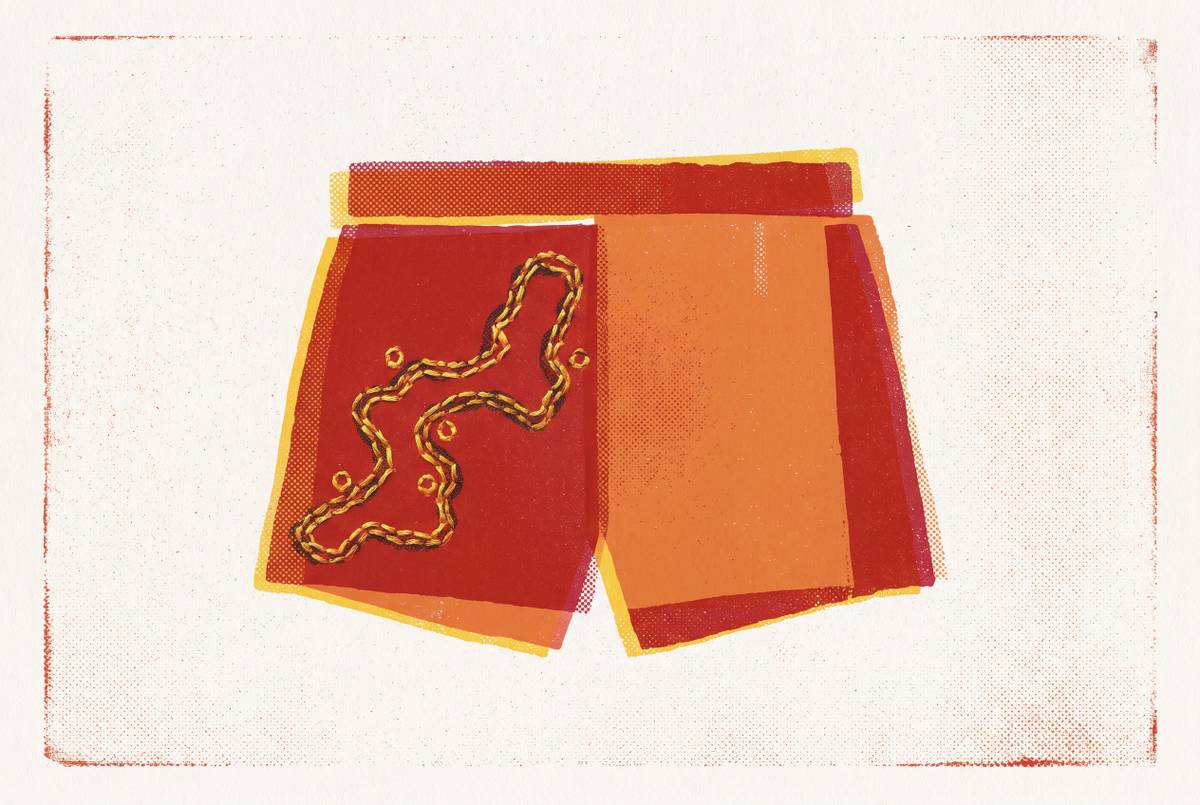
Made-to-order embroidered race apparel offers another form of visible specificity, recording the race, year, distance, and runner’s name in an object that can be worn. These details distinguish it from a generic shirt announcing only that its wearer is a marathon finisher. The personalization is the substance of the piece. For a first-marathon gift, that makes the garment a record of a particular milestone.
Custom embroidery has become a recognizable made-to-order category, and its practical limits follow from that individual focus. Sellers in this category typically cannot accept returns because the item has been made for a particular person. That specificity is also the basis for comparing it with GPS route art, since the embroidered piece identifies the runner and achievement while the route image gives visual form to the recorded run. Neither format is automatically more personal, because the decisive detail is what each one preserves about its recipient.
A medal on display marks a completed race, while an embroidered piece worn on the next long run takes that achievement back into the practice that produced it. The object remains part of an active routine. It can take on new meaning through later training while keeping its link to the original finish. When the buildup is understood as part of the achievement, a keepsake used during the preparation for another race belongs naturally to both the completed effort and the work still ahead.
What actually determines whether a keepsake stays with you
Course landmarks locate the effort, anniversary designs place it in shared history, and NFC access connects it to a recorded result. A nameplate makes ownership visible, while GPS-based art makes the run itself the subject. Embroidery adds the possibility of continued use. These are not equivalent kinds of personalization, so the useful comparison is not simply which object includes the most details, but which details connect most closely to the recipient’s experience.
That connection explains why an ordinary-looking medal can still remain valuable for years. Seeing it may bring back the weather, a friend who ran beside the finisher, or what was happening in their life that made the race matter. Design alone cannot account for those associations. A keepsake with more specific references gives those memories more points of contact, but it does not need elaborate styling to do so. The standard is fidelity to the experience.
Most runners do not return to the same race year after year, which makes a medal a record of a one-time event without regular reinforcement through repetition. That strengthens the need for the object to preserve a recognizable connection independently of another visit to the course. For a personalized gift, the strongest distinction is therefore between an object that names an achievement and one that reveals whose achievement it was. Every finisher gets the same medal.