Why the Most Personal Marathon Keepsake Starts With the Route Not the Ribbon
A runner's own GPS track turns a marathon into a keepsake.
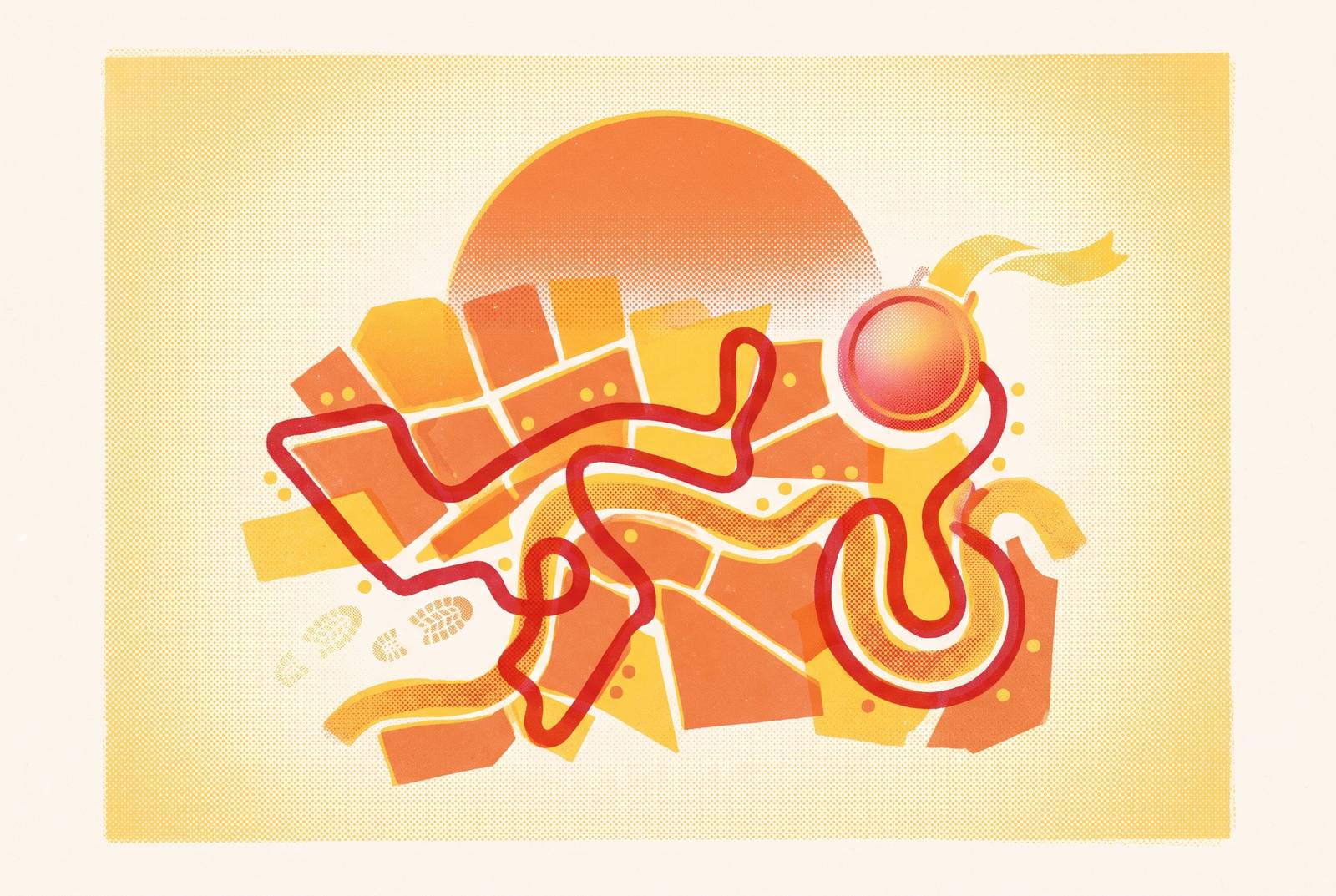
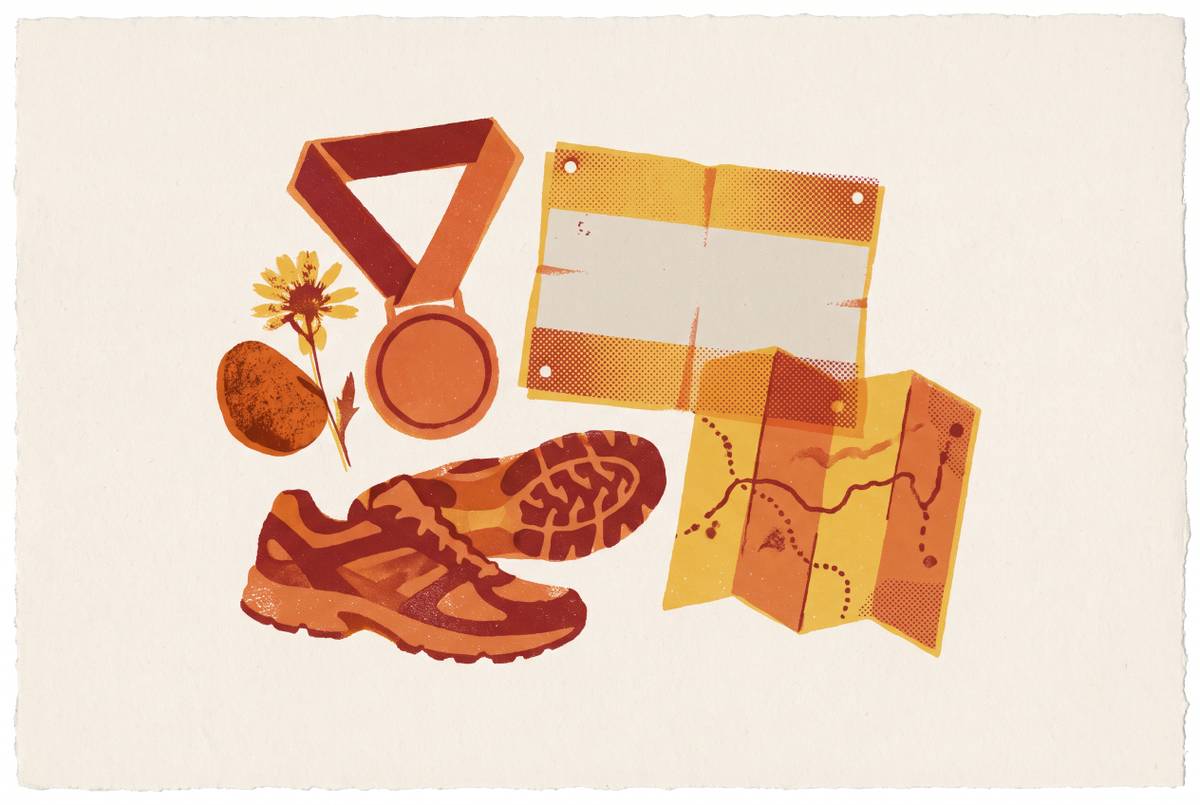
A keepsake made from the runner’s own GPS route is a thoughtful gift for someone who has just finished their first marathon. A route print, physical 3D map or embroidered garment preserves their particular passage through 26.2 miles. The distinction is simple but important. The finisher’s medal recognizes the achievement, while the route gives that achievement its most personal form.
What a finisher's medal actually is — and what it cannot be
A volunteer places the medal around the runner’s neck, and its weight gives the finish a physical presence. The object belongs to that moment from then on. It marks the end of the race and the beginning of being someone who completed it. For a first-time marathon runner, that association can make an otherwise shared object irreplaceable.
Yet the medal is designed to be universal. Every qualifier who crosses the line receives the same object, regardless of what brought them there or what finishing required. That equality is part of its value.
But its design cannot capture each runner’s own race. The weather, the person who ran beside them and the significance of reaching the finish remain in the runner’s memory. A ribbon can summon those recollections without recording them.
How medal makers themselves have started reaching toward the route
New York Road Runners built the 2026 TCS New York City Marathon medal around the city’s skyline and the five bridges runners cross. Its lively sunburst shape frames the places runners passed on foot. The bridges connect the award to the physical demands and setting of the race.
NYRR chief marketing and digital officer Juliette Morris described the design as honoring “growth, resilience, and power.” Although that language concerns the five boroughs, it also fits the runner’s journey through them. The Eugene Marathon made a related choice for its 2026 marathon and half marathon medals. A subtle rolling wave on the back represents the Willamette River, giving a feature of the route a place in the keepsake.
These designs move official commemoration toward the landscape of the race. A bridge or river can recall something a generic running emblem cannot, because it belongs to the place where the effort happened. Even so, the medal presents that geography as a shared experience.
Why your GPS track is a different thing from the official course
The official course describes where the race is meant to go. A runner’s GPS track records how they moved through it. Those are different records, even when they appear similar at a glance. One belongs to the event, while the other comes from a particular body moving through the event at a particular pace.
A GPX file from Strava or Garmin can preserve coordinates, pace and elevation, showing where the runner slowed or surged. The line also reflects differences in how the course was covered, including tangent lines and swings toward aid stations. Two runners can finish the same marathon and have different tracks.
The file records movement, giving memories of grief, confidence or determination a specific place to return to. That is especially useful for a local race or older event that has no standard route print. When the exact turns become difficult to reconstruct from memory, the saved track remains a record of the route actually taken.
What the training weeks put into that GPS file before race day
The race-day file means something because of work that began months earlier. It marks the culmination of those training runs. The finish comes after hundreds of miles, early mornings and decisions to keep going again and again. Without that preparation, the race route would be only a line through a place.
Training has its own geography and its own GPS records. The same streets before dawn and the long-run routes learned over weeks become familiar through repetition. Each logged run gives a time and a place to effort that might otherwise blur into the general memory of preparing.
The race occupies only a fraction of the time and distance invested. Its emotional weight can therefore be much larger than the hours spent between the start and finish suggest. A goal that began as a fitness challenge may have reshaped daily life or changed how the runner understood their body. The race route holds a reminder of that longer effort, while the training tracks keep a record of the quieter places behind it.
Why the marathon has always been a ritual as much as a race
Completing a marathon can mean seeking adventure, confronting grief or proving something to oneself. These reasons need not appear in a finish time. A runner may reach the line with an athletic result and a changed understanding of what they can withstand. For that person, the event is a threshold.
The preparation gives that threshold much of its force. Long runs, early alarms and tapering organize the weeks before the start into a repeated commitment. By race day, finishing has become connected to how the runner has lived. This helps explain why the memory of a first marathon can exceed the significance of its placing.
A keepsake can capture only part of what that felt like. It can, however, give the runner a precise point of contact with it. Their own route is useful because it records the path on which that experience unfolded, without pretending to explain it to everyone else. Its significance does not depend on a stranger being able to read the whole story from its shape.
How route-based keepsakes translate a GPS track into something you can hold or wear
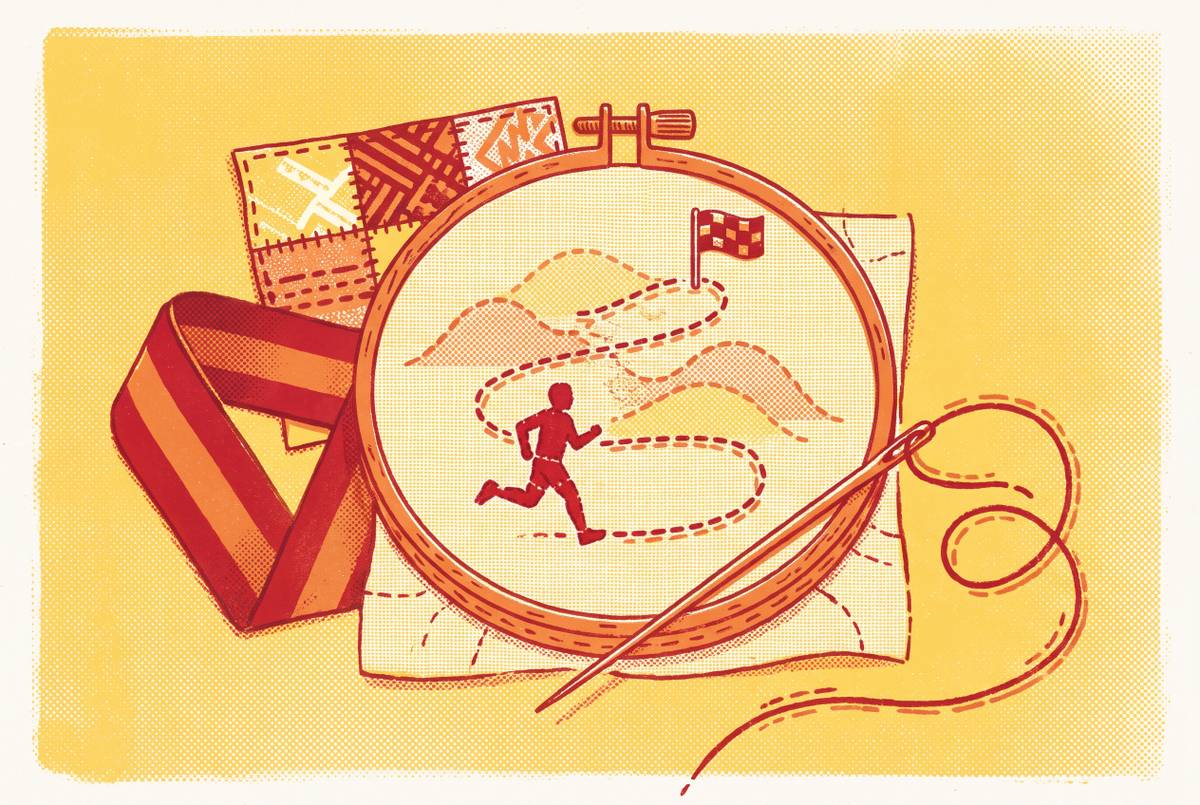
Route-based keepsakes turn a digital record into an object that can be displayed, handled or worn. The category includes wall-ready prints made from Strava or GPX files, custom 3D maps and embroidery. The formats serve different purposes. Their personal value begins with whether the maker uses the runner’s actual track.
For a print, the runner exports a GPS file from Strava, Garmin or a fitness tracker and submits it to the maker. The design can combine that line with the runner’s name, finish time, date and elevation profile. The route supplies the individual geometry. The added details identify the occasion and give the record context for someone viewing it on a wall.
Etsy-based makers also translate personal GPS tracks into physical topographic models. These extend the idea beyond a flat image, whether the source is a marathon, an ultra or a local long run. Embroidery takes the category in a different direction. A route stitched onto a garment becomes wearable. On embroidered shorts, the record of a completed run can return to the road during the next one.
What do you give a friend who just finished their first marathon?
A print makes a gift to put on display, while a 3D map gives the route a shape that can be held. Embroidered clothing makes it part of something worn. Choosing among them concerns how the recipient will live with the memory.
For a giver who was not at the race, the route provides a concrete starting point. A print or map can be given without knowing the runner’s shoe size, what they like to eat or their training goals. Some makers accept commissions with the runner’s name, finish time and date without requiring the recipient’s involvement. The runner’s Strava or Garmin account may have their personal GPS file, while an official race file shows the course shared by everyone.
A course-based object celebrates where the runner raced, while a personal-track object preserves how they moved through it. For someone who adjusted schedules around long-run Sundays, drove to the start or waited at the finish, either can acknowledge more than a result. The deeper recognition comes from the route’s existing significance.
The strongest objection to route keepsakes, and why it misreads the medal's value
The strongest objection is the distinction between a commissioned keepsake and the official medal, which was handed over at the finish and touched the race-day moment. That is a substantial distinction. The volunteer’s gesture, the weight around the neck and the immediate association with completion cannot be recreated by ordering something later.
The medal’s authority comes partly from its universality. It places its recipient among the people who completed the event and gives that shared accomplishment a recognized form. Personalizing every detail is not its purpose.
A route keepsake takes the runner’s recorded passage as its starting point and gives that passage a form suited to life after the race. Its claim to personal significance depends on the source data. A purchased object is not inherently more earned than a medal, but one made from an actual run has a direct connection to that runner’s effort.
What to look for when choosing how to commemorate a specific route
For a runner or gift-giver choosing a keepsake, the first question is what the maker uses as the source. A personal Strava or Garmin file records the runner’s passage, while a generic map records the official course. The distinction should be clear before production begins. A name and finish time personalize a standard map, but they do not turn its line into the runner’s own GPS track.
The next consideration is how the object fits the recipient’s life. Wall art lets other people see the route, while a physical 3D map is something to hold. Embroidered shorts place it on the body during another run. Each of those uses can be as thoughtful as the others.
For a gift, it is also useful to establish whether the maker accepts a GPX file from a third party or requires the runner to submit it. That decides whether the gift can be made without the runner taking part. Waiting for the design proof to be approved before making the object adds another check for errors. A route, name or time error would alter the very details that give the keepsake its purpose.
These criteria favor a clear relationship between the original run and the finished object. GPS-derived embroidery approved through a proof is one example, just as a print or model can meet the same standard. The format need not explain the achievement to everyone. Would this object mean anything to someone who did not run this race, or does it only make sense to the person whose GPS coordinates are inside it?