What Makes Running Apparel Worth Keeping vs. Worth Discarding
Running apparel earns its place in the drawer by recording what the runner did.
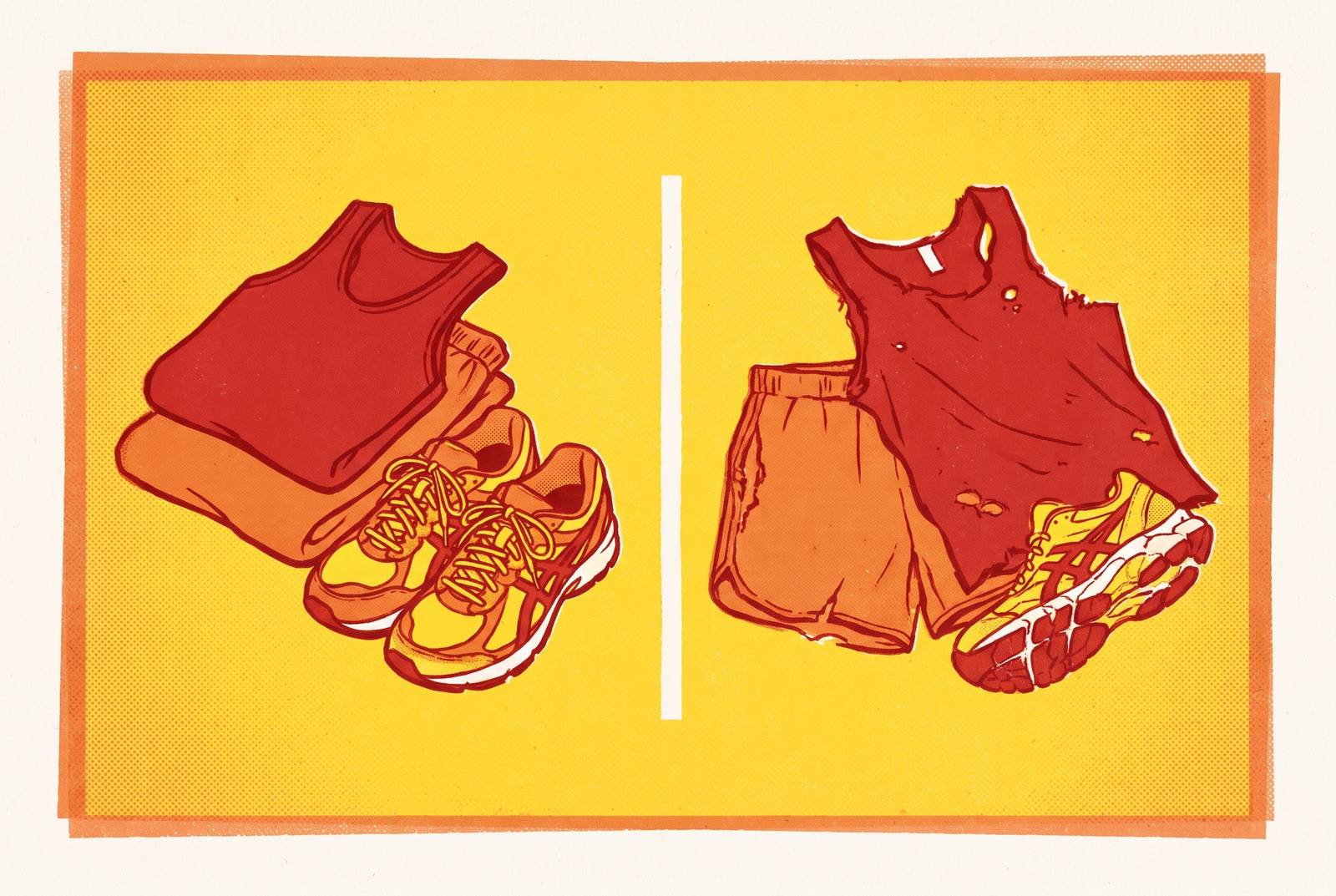
A personalized gift for a marathon finisher succeeds when it records the run they completed. GPS route art or embroidered apparel made from the runner’s own data records that run. The same principle separates running apparel worth keeping from apparel worth discarding. Quality makes a garment fit to wear, but the experience it records gives it a lasting place in the drawer.
Why runners treat some gear as documents and throw the rest away
The shirt comes out of the bib bag from the race expo, still smelling of new fabric. It is folded and set aside until after the finish. Nothing about its construction requires that delay. The runner is waiting for the experience that will make wearing it feel legitimate. Before the race, it is merchandise associated with an event. Afterward, it can become a document of participation, effort and completion.
Several tees that work well sit untouched, while the runner would never think of throwing away one older shirt. Price and fabric weight cannot fully explain the preference. The older shirt is tied to something the runner actually did, and new fabric would not replace what it means to them.
Yet a document need not record a successful finish. A shirt can also preserve an unfinished attempt, or a training garment can recall work that no crowd witnessed. What changes is the relationship between object and experience. Performance explains its usefulness. An earned connection explains why it stays after newer clothing arrives.
The unwritten rule about finisher shirts and what it reveals about how runners value gear
The finisher-shirt ritual gives that connection a social form. A runner collects the shirt at the expo, folds it and leaves it alone until returning home after the finish. The garment is already theirs to possess, but not yet theirs to wear under the unwritten code. Ownership and entitlement are separate. The miles, rather than the transaction, supply the missing credential.
That separation is why wearing the shirt before the start can draw disapproval. To runners who observe the rule, it claims something that has not happened yet. Their objection concerns the relationship between the wearer and the achievement the shirt represents. The group protects a shared meaning by treating the shirt as evidence.
That relationship is harder to settle when the runner has not finished the race. Some runners keep the shirt folded at the back of the drawer, its original creases preserved, as a witness to an incomplete act. Others argue that real effort deserves recognition even without a finish. The disagreement is about where entitlement begins. Both positions grant that wearing the garment says something about what its owner endured.
There is no need to settle that dispute to understand its significance. The case against wearing an unearned shirt treats completion as the condition that protects every finisher’s claim. Neither side argues that possession alone settles the question. Apparel has become a form of credentialing, and the debate concerns which experience the credential should acknowledge.
How race organizers build commemorative weight into the shirt before the runner ever touches it
Organizers can establish the terms of that credential before the runner collects the garment. The Honolulu Marathon shirt derives its force from a restriction. Jim Barahal describes the distinction plainly. “It's not an expensive shirt. There's nothing fancy about it, but there's only one way to get this sucker, and it's to go 26.2 miles. I think that's why it's so valued by people.”
Design can establish another kind of specificity. Oakland’s artist-commission model approaches the shirt as an intentional commemorative object. Where design draws on local culture, the garment can document place as well as performance. That gives the memory a setting.
Rocky Run makes its narrative explicit by connecting the shirt to the iconic moment that inspired the race. Its invitation is “Wear it and go the distance. This year, it's your turn at the top”. The garment gives the runner a place in an existing story. The runner’s own effort then makes the invitation more than words used to promote the race.
These approaches do not require a ranking. Honolulu emphasizes an earned condition, while an artist commission or a race narrative gives the object a distinct visual and cultural identity. Each calls for a choice about what the shirt should stand for. Design must make that meaning visible without making it interchangeable. A shirt can tell a recognizable story at a glance while leaving room for the runner’s own experience to complete it.
Why construction quality determines whether a keeper survives long enough to matter
Commemorative intent cannot make a badly constructed garment durable. Construction is the necessary support for its meaning. For a finisher tee worn on later training runs, that means tolerating sweat, sun and repeated washing while remaining comfortable enough to reach for again.
Fabric affects whether that next use happens at all. Cotton gets heavy and clammy in motion, while technical fabrics dry faster, stay lighter and hold their shape. Fit can be just as decisive. A runner may leave a meaningful shirt untouched because it fails the practical demands of the next run. Its commemorative value and its usefulness are separate qualities, even when both are needed for regular wear.
The design itself also needs to survive washing. Embroidery does not crack or peel in the way screen-printed designs can, so the choice of finish can protect the part of the garment that records the experience. This is not an argument that a worn first-marathon shirt loses its value. Threadbare is different from disintegrated. A garment has to survive long enough to acquire the wear that makes age part of its appeal, rather than becoming unusable before that history develops.
Why training gear accumulates meaning the finisher shirt never sees
The finisher shirt begins its personal history near the end of a much longer process. Training apparel has already been there through the weeks that made the race possible. Its record is quieter and less public. Early mornings, bad weather, long runs that go wrong and tempo days that go right give familiar garments associations that a race-issued shirt cannot acquire afterward.
The long-run hoodie and the tempo-day tee belong to that earlier history. They can mean something to the runner without a printed race name or an official rule about who can own them. Repeated use supplies the connection. A garment becomes associated with a particular stretch of work because it was there throughout it, rather than because it was designed to commemorate it. The runner knows what it accompanied even when nobody else can read that history.
This also distinguishes the experience of running from the later act of remembering. At mile twenty-two, attention narrows to the task at hand. The finisher garment gains much of its meaning in retrospect. By then, the training weeks have already attached memories to the clothing worn through them. Completion gives the race shirt its credential, but it does not absorb or replace the separate history of the buildup.
Personalized gear can make that less visible history explicit. A design drawn from GPS data can record the marathon course, a training loop or a long-run route. The familiar roads become the subject. A route known by feel can take a visible form in embroidery, giving the garment a reference beyond a general statement of enthusiasm for running. The result commemorates the work behind the finish without treating race day as the only experience worth recording.
What makes a personalized marathon finisher gift succeed where generic apparel fails?
A gift for someone who has just finished their first marathon faces a particular test. It needs to recognize a completed achievement without reducing it to a generic interest. A running slogan identifies a category. The runner’s own route identifies an experience.
GPS route art and embroidered route apparel serve different versions of that purpose. Personalized maps made from Strava, Garmin or GPX data document the route without introducing the fit requirements of clothing. Embroidered apparel places that record on something the runner can wear. The defining criterion is whether the design refers to this runner’s actual run, rather than a course or achievement chosen without reference to it.
For a gift-giver choosing apparel, the process follows from that distinction. The process starts with the achievement to be recognized and the runner’s own route data. Size and color still need attention, because a meaningful design does not correct an unsuitable garment. Made-to-order embroidery approved before stitching allows the proposed record to be considered before it becomes part of the clothing. Approval before production allows the giver to check for a wrong race or an unwanted choice.
The giver does not need to have shared the miles. A spouse ordering a route map recognizes the runner’s achievement. Commemorative objects can be meaningful to people who watched the training as well as to the person who completed it. Recognition is the gift’s role.
What separates the apparel a runner passes on from the apparel that goes in the bin
Fabric, fit and design can move intact from one person to another, but the earned history does not transfer automatically. A recipient can understand what the shirt represents without becoming the person who earned it. The object can preserve that distinction. Its value as a keepsake rests partly on the ability to identify whose effort it records.
Specificity does not always mean that the garment itself is unique. Many finishers can get the same Honolulu shirt, yet each wearer must complete the required distance to earn it. A GPS-based design locates specificity elsewhere, in the runner’s recorded route. One uses a shared credential, while the other makes an individual record visible. Both give the garment a connection that cannot be supplied by fabric quality alone.
A generic technical shirt may perform its job well and remain replaceable when it wears out. A keeper serves a different purpose. Its continued use connects an earlier effort to the next one, while its survival allows that connection to remain legible to someone else. Keeping it is not simply a refusal to discard old clothing.
In that sense, the strongest commemorative apparel remains part of a running life and can be worn again or passed on with its history intact. The drawer need not hold every race bag’s contents. It can hold a few specific things, including the shirt earned at the finish and the familiar garment reached for before the next long run.