What Real Personalization Means When the Gift Is Built From Split Times and a Specific Course
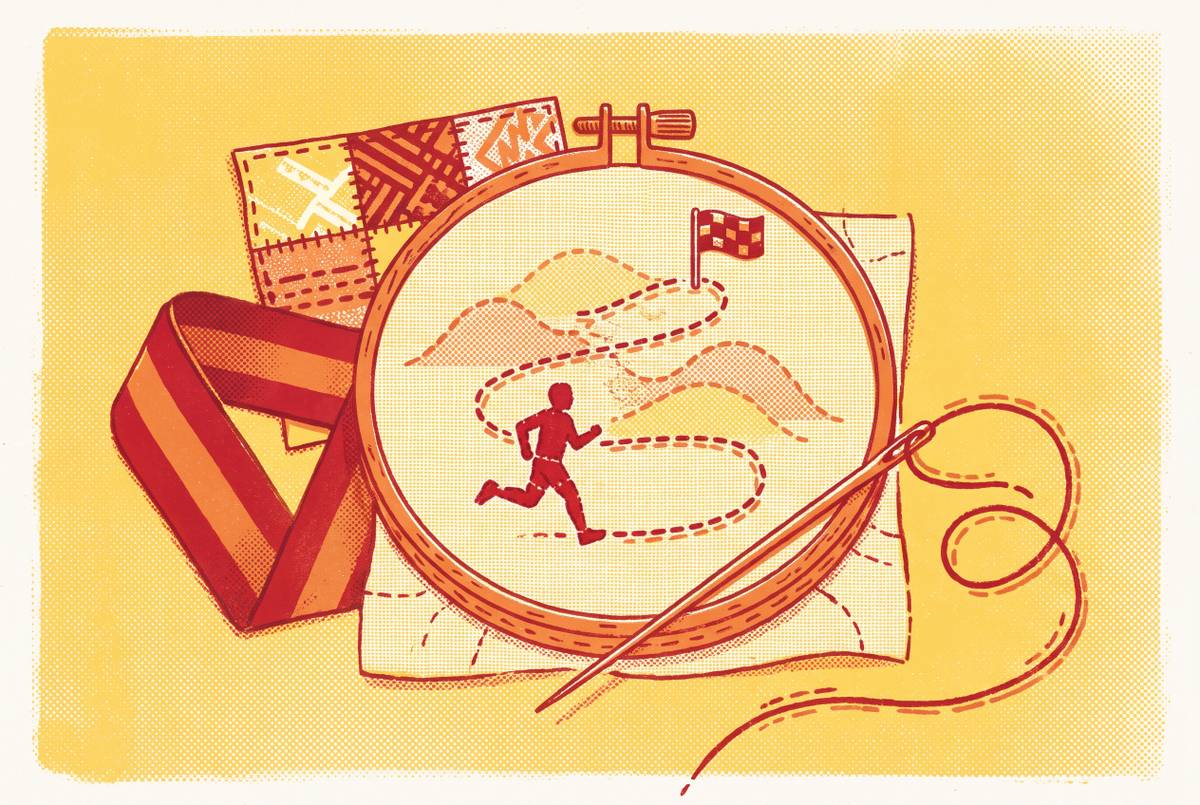
Embroidering a runner's own splits and course turns a gift into proof.

A genuinely personalized running gift for marathon finishers is built from the runner’s actual course, split times, and training miles. An embroidered piece made from those records gives the runner something they can touch that shows what they achieved. Real personalization is therefore more than a design choice. It preserves evidence of what this person did, rather than simply acknowledging that they finished a marathon.
Why runners treat a finished race as part of who they are, not just something they did
Athletic identity describes the degree to which a person looks to sport for self-definition and for the fulfillment of achievement, affiliation, and exhibition needs. For a runner who sees sport this way, finishing a race becomes part of how they see themselves. The accomplishment can express what they are capable of, connect them to other runners, and give them something meaningful to show. A commemorative object consequently reaches beyond the event into the person’s sense of who they are.
That connection changes the standard by which personalization should be judged. A name establishes ownership, but it does not explain the achievement to which the owner attaches significance. If the race is an episode in an ongoing personal story, its course, its progression, and the work preceding it are not interchangeable details. They distinguish this episode from another runner’s experience, or from another race in the same runner’s life. A gift that addresses this identity either honors the specific person and their passage through the race or remains an acknowledgment of the category they belong to.
What a runner actually accumulates in the months before the start line
A marathon finish is the endpoint of a build lasting several months, depending on the runner’s experience level. Weekly mileage climbs before the taper, giving the build a shape that the final result cannot show. The runner accumulates more than distance. Deliberate stress, sacrifice, and periodized work belong to the achievement even though they precede the event that receives public recognition.
The distribution of those miles is part of what makes the build personal. A total does not show where the hard weeks fell or how the runner experienced the movement from sustained work into the taper. That reduction in training has an emotional texture. Its meaning belongs to the person who lived through it. Two runners can arrive at the same start line without having arrived there through the same accumulation of effort, and the people closest to them may understand differences that a race result cannot convey.
Training data records some of that work that others would not see. It cannot explain every feeling or sacrifice, but it can preserve how the miles stacked up before race day. That is a different kind of evidence from a finish time. A gift-giver who recognizes the build understands the finish as the last step of a particular process. Including those training miles therefore broadens the object’s subject from the race itself to the work that made it possible.
Why the finisher's medal, for all it means, is the same medal everyone got
A finisher’s medal gives the runner’s effort a form they can hold. It connects months of preparation with the race-day experience and the accomplishment of reaching the finish. The runner can hold it, display it, and share it. That link matters in its own right, especially when the effort it stands for would otherwise live on only in memories and recorded results.
Its significance can also deepen after the event. Years later, a medal can bring back the weather, the friend beside the runner, or what was happening in their life that made that race matter. It can spur them to take part again and remind them during hard times that they can get through difficulties. The fact that other finishers received the same medal does not diminish the individual memories attached to it.
The object commemorates the category of marathon finisher. The same design can hold very different meanings. It does not distinguish where one runner slowed, what another held over the final miles, or how either prepared for the start. A data-specific gift operates at that finer level without replacing the medal or contesting its value. The contrast is between shared recognition and an individual record.
What GPS data actually captures that no other record does
A modern watch used for training and racing creates a GPS file that records where the runner’s body was at regular intervals. The file is a spatial and temporal record of passage through the course. Unlike a finish time, it preserves more than the endpoint, and unlike a general course map, it is tied to the person who moved through that route. Its subject is the run as recorded.
That distinction makes the underlying data singular. No two runners follow the same line at the same pace at every moment, so files from the same race are not identical. Split times give this trace a further temporal structure. They show where the runner surged, where they slowed, and what they maintained over the final miles. Together, the route and splits reveal a progression that a single result compresses into one figure. They preserve the changes themselves.
Mark Your Moment and Positive Prints illustrate how this data can become the substance of a commemorative object. Products built around GPX files from Strava, Garmin, or other fitness trackers turn recorded activity into prints and maps, with details including the runner’s name, finish time, distance, elevation, and date. The important distinction is the role of the data. Rather than serving only as a caption beneath an interchangeable image, it supplies the content of the object. The resulting record is specific, verifiable, and unrepeatable because it originates in the runner’s own activity. Memory gives that activity meaning, while the file preserves details that memory alone need not retain.
Why embroidery is the right material form for data this specific
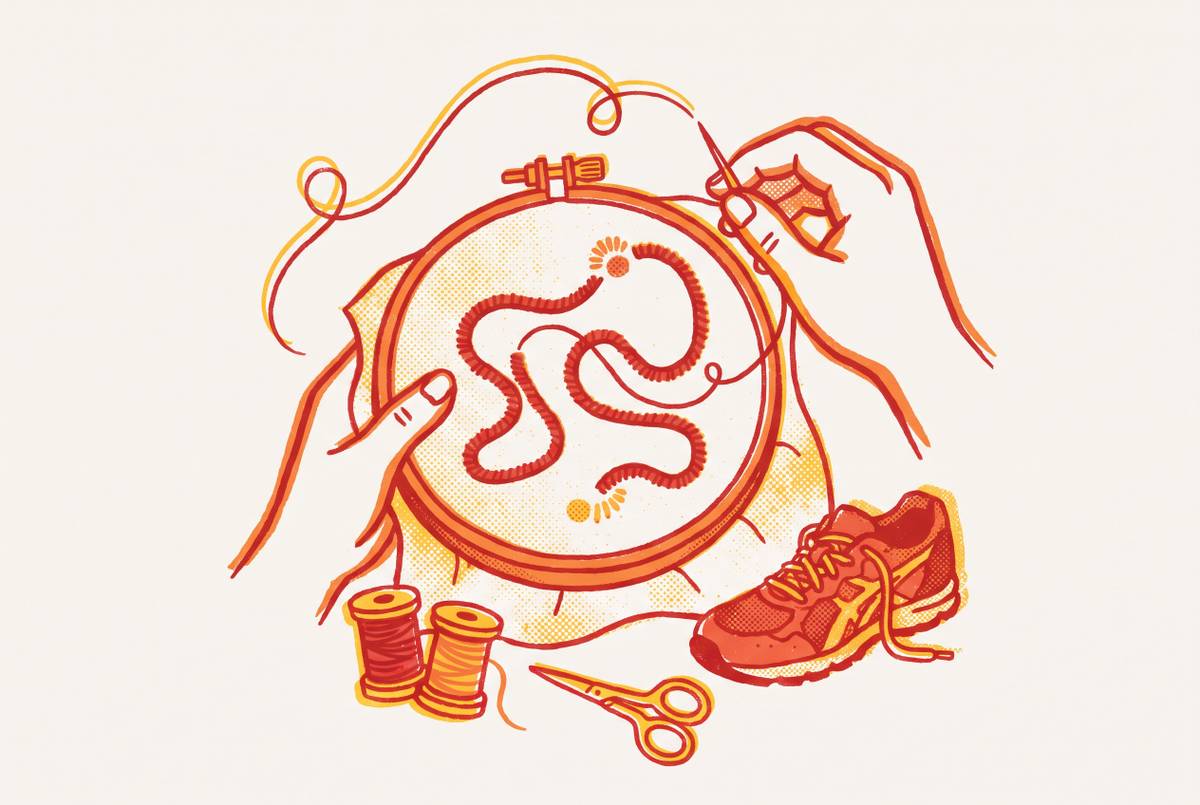
Embroidery turns this digital record into something physical that can last. Printed designs can fade and peel, but embroidered stitching holds up wash after wash. For an object intended to outlast the race it commemorates, that difference has a practical purpose. A wearable piece makes durability part of the argument because its continued use should not work against its commemorative purpose.
Raised thread also gives the record texture and presence on fabric. The result has the character of wearable art. Embroidery signals craft through a visibly made form, which fits an object whose content comes from a particular person’s effort. The physical treatment gives the details a presence appropriate to their role as the substance of the piece.
An embroidered piece built from a runner’s GPS data and splits can take its final form only once those details are supplied. Personalization is therefore a condition of its existence. The personal record determines what commemorative work is made from a blank item that may precede the runner’s involvement.
The growing demand for personalized embroidery shows that more people want objects that mean something to them as well as look good. Monograms, handwritten notes, and digitized signatures express related desires to make an object irreducibly specific. Race data gives that desire a distinct subject. Instead of preserving only a mark associated with a person, it preserves the recorded shape of something that person accomplished.
How specificity transforms a marathon finisher’s gift from gesture into evidence
Specificity transforms a gift into evidence when the runner’s record determines its content. A foam roller or compression socks can show that the giver knows the person runs, while a name on a stock item shows who it is for. Neither records this particular achievement. By contrast, the route shows where the runner went, the splits show how the race unfolded, and the training miles document the preparation leading to the start. Their combination gives the object a basis that no other runner could supply.
A customized marathon map engraved with the runner’s name, time, and race date already preserves a visual narrative of the route. Its turns and straights provide a reminder of the geography through which the achievement took place. Splits extend that narrative beyond location. They distinguish the shape of the course from the arc of the effort, showing how the runner moved through it over time. Training data adds the preceding build, so that the object’s scope is not restricted to the hours between start and finish.
A gift-giver may not have access to GPS files or split times, and asking for them can compromise the surprise. The information has to come from somewhere. Upload workflows that the runner can complete address this constraint by making the gift collaborative. Surprise gives way to participation, but the record can remain faithful to the activity it commemorates. The giver does not have to possess every detail in advance to recognize that those details deserve a place in the object.
There is also a limit to who will value this degree of commemoration. Not every finisher gives a race the same significance, and a first marathon alone does not establish the recipient’s attachment to a keepsake. The fit depends on the runner’s relationship to that achievement. For someone who trained hard for a particular goal on a particular course, granular detail is proportionate to the experience. On the narrower test of recording what happened, a generic gift necessarily misses the individual passage, while an accurate, specific gift either finds recognition in those details or reveals the depth of attention devoted to preserving them.
What the gift-giver's attention communicates independently of the object
Recognizing that the training build had its own shape, that the taper had an emotional texture, and that the splits describe a progression shows an understanding of what the finish represents. The giver sees more than a completed event. Even when the runner supplies the file, the decision to make that record central communicates that the details are worth retaining. Participation in the process does not erase the care behind its premise.
That attention can remain legible long after race day. A commemorative object can remind a runner of their capacity to overcome challenges during difficult periods, and a record tied to a particular race gives that reminder a specific anchor. It points back to an identifiable effort. Rather than asking the runner to supply every connection between a generic object and a personal memory, the gift preserves some of those connections in its own form. The remembered accomplishment has a route, a progression, and a build.
The final value is not technical complexity for its own sake. GPS files, split times, and embroidery are means of recognizing a person accurately. Their use makes a plain statement through the object. This runner, on this course, with these splits and these training weeks, is remembered exactly as they were.