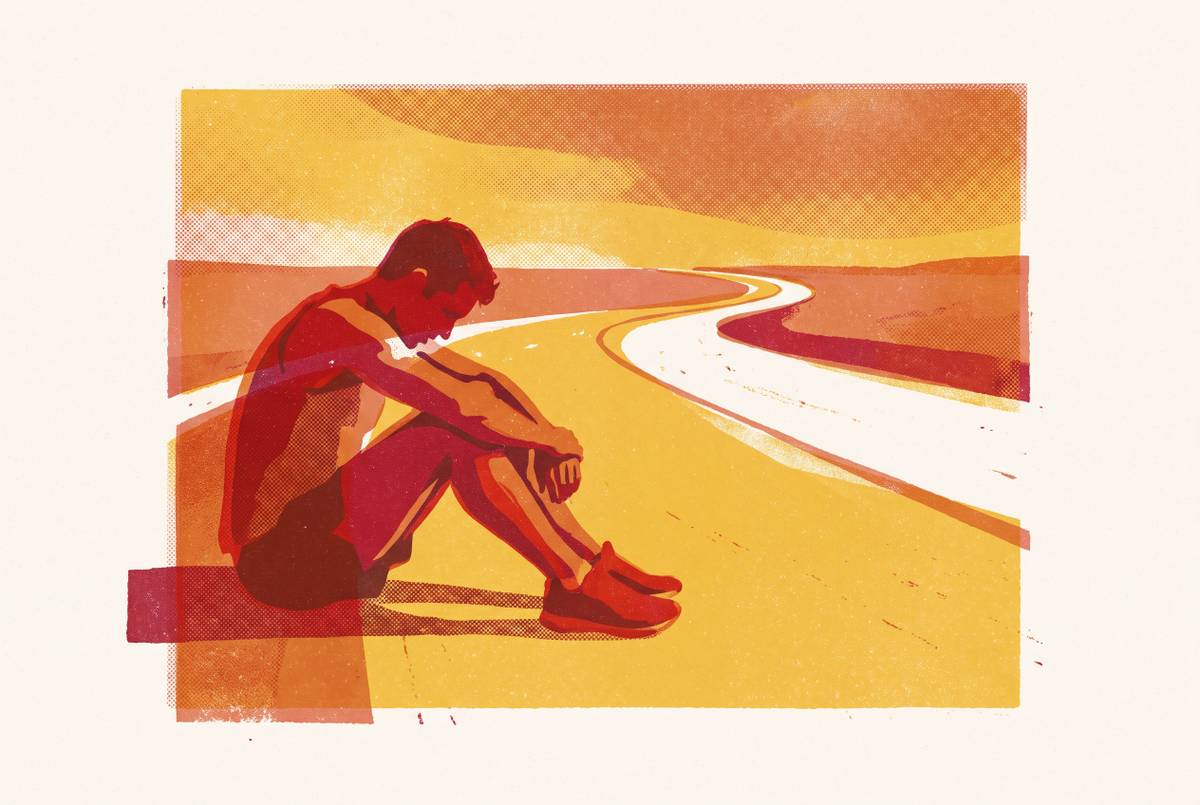
Running Through Winter for a Spring Marathon
Winter training builds the foundation that makes spring marathons matter.

Running through winter for a spring marathon is more than a problem of weather and scheduling. It is an accumulation of meaning through dark miles, long runs and weeks of deliberate work. The finish line gives that effort a visible end, but it does not contain the whole achievement. Much of what makes the race matter has already happened before the starting gun.
Why spring is the season runners spend all winter earning
Spring gives winter training a destination. Its promise of cool racing conditions and the chance to turn preparation into performance makes the season especially anticipated. For a runner with a spring marathon ahead, winter is therefore not simply an interval to endure. It is the period in which a distant intention becomes a commitment with a shape. The race gives each week a place in something larger than the next run.
That relationship follows from the calendar. Most spring training cycles start between mid-December and early January and call for 16–20 weeks of planned buildup. The bulk of the work therefore falls in winter, when the conditions are least likely to make running feel inviting. The destination is attractive partly because arriving there prepared demands so much.
Yet the emotional force of that destination is not limited to a finishing time. A goal can make an otherwise unremarkable run feel purposeful without making it pleasant. An easy run in the dark does not need to become a heroic episode to count toward something important. Its value lies in its connection to the weeks before and after it.
What a 16-to-20-week training block actually looks like, week by week
A marathon training block has a clear shape, even when runners have different tasks each day. Its four phases build an aerobic base, develop lactate threshold, bring training to a peak and then taper toward the race. The week numbers in this outline count down toward race day. They describe the purpose of each period. Understanding that purpose helps distinguish a difficult week from a directionless one.
Phase 1, roughly weeks 16–13, establishes the aerobic base through conversational-effort runs and neuromuscular prep. This is the work of building the engine before asking it for intensity. Phase 2, weeks 12–9, shifts toward lactate threshold development and introduces the first real sharpening. The easy miles now sit within a more specific demand, but they do not cease to matter. The change is in what the accumulated base is being asked to support.
Phase 3, weeks 8–5, has the longest long runs and the highest weekly mileage of the block. These are the weeks when the scale of the undertaking becomes hardest to overlook. The weekly long run is the load-bearing structure, supported by the accumulation of 2–3 easy runs each week over months. Those shorter runs build the fitness that is put to the test on the long run. Peak training can consequently feel both demanding and deeply absorbing, because so much of the earlier work is now being brought together.
Phase 4, weeks 4–1, changes the task again. Volume drops, but key intensity stays, so the taper is a period of consolidating the winter's work. That distinction matters after weeks in which progress has been closely associated with doing more. Less running belongs to the architecture of the block as surely as its longest efforts do.
One first-time marathoner's experience gives this structure a human scale, although his calendar was not a spring-marathon schedule. He began to follow a running schedule in February, built up through spring tune-up races and started an 18-week marathon training plan in June. When that plan began, he sought guidance from T3 Coaching founder Kevin Crossman and worked with him through the process. The useful parallel is the progression from early running to a defined plan with support. A training block is not an isolated document, but part of a longer effort to become ready for its demands.
What winter actually asks of the runner who shows up anyway
The structure explains what the runner is doing, but winter changes what doing it requires. Layers, a waterproof jacket, gloves and a hat are practical equipment. Putting them on to run in the dark is also an act of commitment before the session has begun. Pleasant conditions can make the decision to leave home almost effortless. When that encouragement is absent, the goal has to do more of the work.
This is an unglamorous form of difficulty. The dark miles and frozen long runs matter because the runner keeps doing what they set out to do when the conditions offer little to enjoy. The training plan supplies a reason for the session, but it cannot make the conditions appealing. Winter exposes that difference between having a reason and feeling inclined to act on it.
However, commitment is not the same as treating every interruption as a test of resolve. Niggles and true injuries require different responses, while sleep and recovery remain part of the work. The first-time marathoner sustained a glute med injury in December and built a PT routine with Lisa Grabbe at Adirondack Total Care. He maintained that routine for over 20 weeks with his running plan. His experience shows that runners can work on durability as part of training, instead of seeing it as something they either have or lack.
Attention to smaller choices belongs to the same discipline. Rotating through different pairs of shoes is one example, with the aim of building resilience by asking the body to use slightly different muscles. More broadly, winter training rewards attention to how the work is being sustained. A runner can make adjustments and stay just as committed to a goal that matters.
Those adjustments also change where and how training happens. Treadmill workouts, cross-training including cycling, elliptical and swimming, and strength sessions fill gaps when ice, darkness or accumulated fatigue make outdoor running impossible. They belong to the winter block rather than sitting outside its story as inferior substitutes.
Why the people who run beside you in winter become part of the race
That work is personal, but it is not necessarily private. A running group gives winter training a recurring social form, with people meeting around the same discipline of showing up. The first-time marathoner described running with Glens Falls Run Club through winter as “motivating” and a highlight of his week. The value was not confined to encouragement about a future race. The training itself had become something to look forward to because of the people involved.
This is a different relationship from the one a runner has with race-day crowds. Spectators see the effort when it is most on show, while training partners share the weeks when the result is still far off. A shared finish-line photograph captures the day, but people who train together through winter also share the ordinary sessions that made it possible.
A coach contributes another form of continuity. The same runner described check-ins with Kevin Crossman as “motivating and extremely useful”. A plan sets out the work, whereas check-ins hold the runner accountable to a stated goal through the process of doing it. Being held to that goal matters over a long block, when choosing to enter a marathon must lead to choosing to train again and again. The relationship connects intention with follow-through.
For runners training with a charity or fundraiser, that relationship can reach beyond the people sharing the route. The race may carry someone else's story, making each long run part of a commitment larger than personal achievement. The marathon remains an individual physical task, but that does not make it fundamentally solitary. Even elite runners train in groups, and for a first-timer the social fabric of winter can be what prevents a plan from ending in February. The people involved become part of why the race is run at all.
How runners make meaning from the act of finishing — and what that says about the months before it
At the finish line, these commitments come together in one act that others can see. It marks an athletic result, but runners can also understand it as a life metaphor, with the completed distance standing for something beyond running. A study in Frontiers in Psychology frames symbolic meaning and identity expression as dimensions of marathon attractiveness. That supports a distinction between completing an event and making it part of a personal story. It does not mean every runner gives the marathon the same meaning.
For someone running in tribute to a person they have lost, the training carries a weight that a result alone cannot express. The tribute does not begin when the course opens or end when the runner crosses the line. It is present in the dark mornings and the long runs that precede the public occasion. A finish-line photograph can show that the runner arrived, but it cannot fully show what was carried there. A generic medal has the same limit, even when it is deeply valued.
Sculpture offers a useful way to understand the wish to make an achievement last. Bobbi Gibb is an accomplished painter and sculptor, and the idea of Gibb's statue provides a concrete anchor for that wish. A statue gives lasting, solid form to something that is over in a moment. Yet the visible form matters because of the story attached to it. The same relationship holds when a runner looks for an object that can stand for a marathon.
The finish is therefore best understood as the public proof of a longer story. In the months before it, doing the work again and again made the goal part of daily life. Training gives the finish its depth through changes in the runner's life, memories of someone lost or work shared with others. What deserves to last is not only the fact of completion, but the particular path that made completion meaningful.
What to do with all those winter miles once the race is over
Commemoration begins with deciding which part of that path an object should preserve. The finisher medal marks the race, while the bib has the race name, date and number on it. Many runners report feeling more attached to the bib because it physically covered the distance with them. Its value comes from participation rather than appearance alone. It is a particular object from a particular effort.
GPS-based commemoration extends that specificity to the route. Print-my-routes services turn real GPS routes into custom 3D topographic sculptures that are 3D-printed in PLA and can be engraved with a name, date or message. Poster services render a runner's exact course as minimalist wall art, while wearable makers translate GPS data into keepsakes. These forms differ, but their premise is the same. The route is worth preserving because it records where this runner's effort took place.
Weeks of buildup and GPS data from long runs hold parts of the achievement that race-day records leave out. An artifact drawn from that material can acknowledge the preparation.
As a gift, training-specific commemoration also communicates attention. It shows that the giver remembered not just the event but the commitment required to reach it. That is a different gesture from buying generic running gear, because it responds to the recipient's particular story. The best keepsake can leave some miles out. It needs to hold enough of that runner's journey to bring back how the spring marathon took shape, and was already deeply lived, through winter.