The Finish Line Is Just the Beginning of What Those Shorts Can Mean
Embroidered race routes turn training miles into wearable memory.
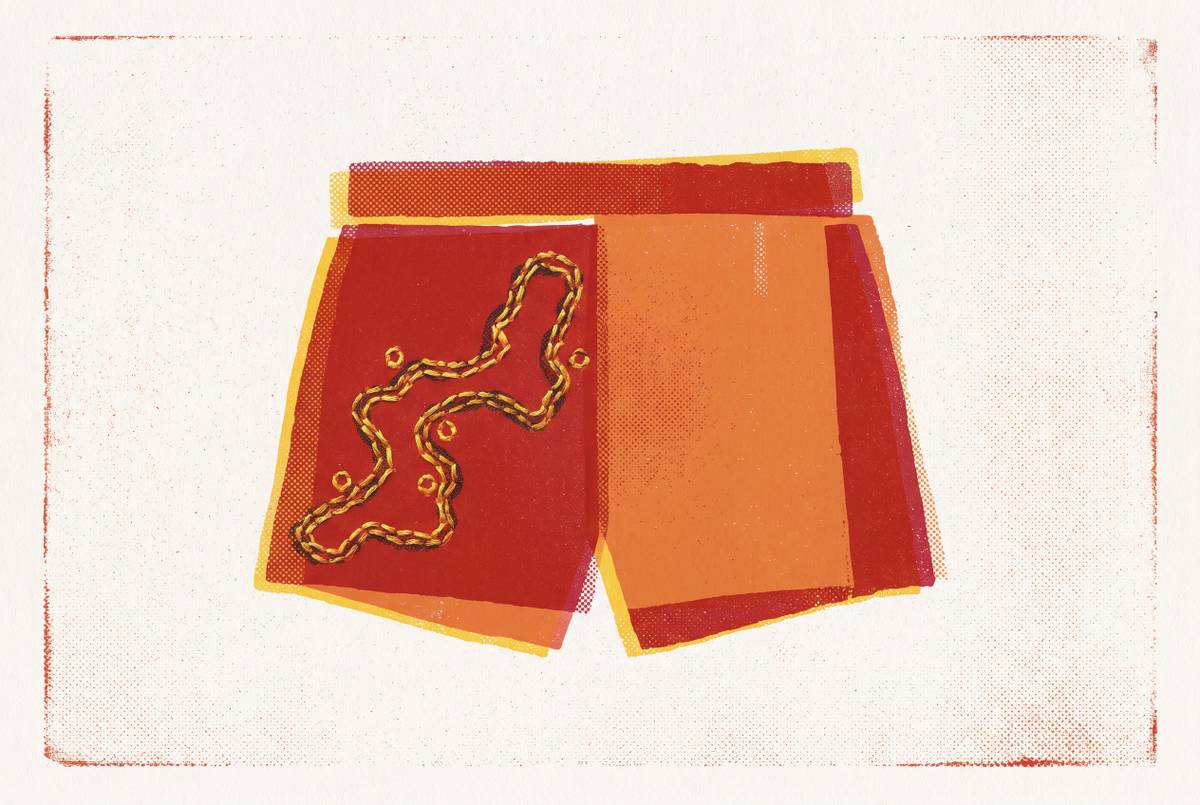
Custom running shorts with an embroidered race route turn a runner’s GPS activity into a wearable keepsake, with the course on one leg and a record of the training on the other. The process moves from a GPX file through embroidery digitization to stitching on the garment. Its purpose is fuller commemoration, honoring the finish and the months that made it possible.
Why the finish line became the symbol that obscures the real story
The finish line gives a race the image it is known by. The crowd, the photograph, and the runner crossing make commitment visible at the instant it becomes achievement. For a marathon, that image also represents a cultural milestone, a sign of personal transformation when other traditional milestones can feel out of reach. The feeling is larger than completing a fitness goal. Yet the image cannot show how that change came about.
The race takes one day, but the buildup takes months of early mornings, missed social events, and long runs in tough conditions. Private doubt and recovery fall outside the spectator’s view. The photograph and social post concentrate attention on the crossing because it offers a clear, shared moment of recognition. What is easiest to celebrate therefore becomes a substitute for the much longer experience that deserves recognition.
How the finisher medal became the default object of race memory, and what that framing costs
The finisher medal gives the runner something to keep from that public moment. It is earned through completing the race, but its design and commemorative meaning are set by the institution. Every finisher receives the same object. That shared form is part of its strength, connecting an individual achievement to a particular race, place, and community. Its beauty need not be diminished to acknowledge the limits of what it records.
New York Road Runners’ announcement of the 2026 TCS New York City Marathon finisher medal describes a yearlong design process beginning with 26 initial ideas and proceeding through multiple rounds of refinement. Made of zinc with an electroplated gold finish, the medal is 3.5 inches wide to mark the 50th anniversary of the five-borough course. NYRR describes its evolution from a simple round coin to “a piece of sculptural jewelry, balancing simplicity, beauty, and elegance”. The design commemorates the race, the city, and the course’s five bridges and boroughs.
A first-timer who trained through winter receives the same medal as a veteran chasing a personal best. The object’s design does not show a return from injury or a race run for someone else. Those meanings can become attached to the medal through memory, but they are not inscribed in it. The gap is between an object that identifies the event and one that records the runner’s particular path toward it.
What the training buildup actually contains and why it deserves its own record
A marathon build accumulates hundreds of miles across roughly a hundred days, moving between runs where effort feels effortless and sessions where every step is a struggle. The contrast is part of the experience. Commitment is not one stable feeling sustained for months, but the decision to continue through very different versions of the same undertaking. The good run and the difficult week belong to the same record.
Much of that record has no audience. A runner questions the decision to sign up, completes a long run alone before anyone else is awake, or returns after a week that unsettled their confidence. These are not simply obstacles cleared on the way to the main event. They are where the runner encounters actual limits and begins to understand what continuing requires. By the start line, confidence has an evidentiary basis in work already done.
Calling these months only preparation leaves most of what the runner has done unnamed. The buildup contains the growth and difficulty that give the finish its emotional weight, including experiences that a finishing photograph cannot recover. Some of it nevertheless has a literal record. GPS activities preserve routes, distances, and hours from those weeks, giving the runner something more specific than a general recollection of having trained hard. The data locates the efforts to which those feelings belong.
How do you get a marathon route stitched onto running shorts as a keepsake?
A recorded GPS activity supplies the starting point for an embroidered route. Services such as Strava and Garmin Connect capture an approximation of the path a runner took through a particular place on a particular day. The distinction between a record and a perfect measurement is important. Consumer GPS has accuracy limits, so the resulting line is close to the path traveled. Its value comes from its connection to that activity.
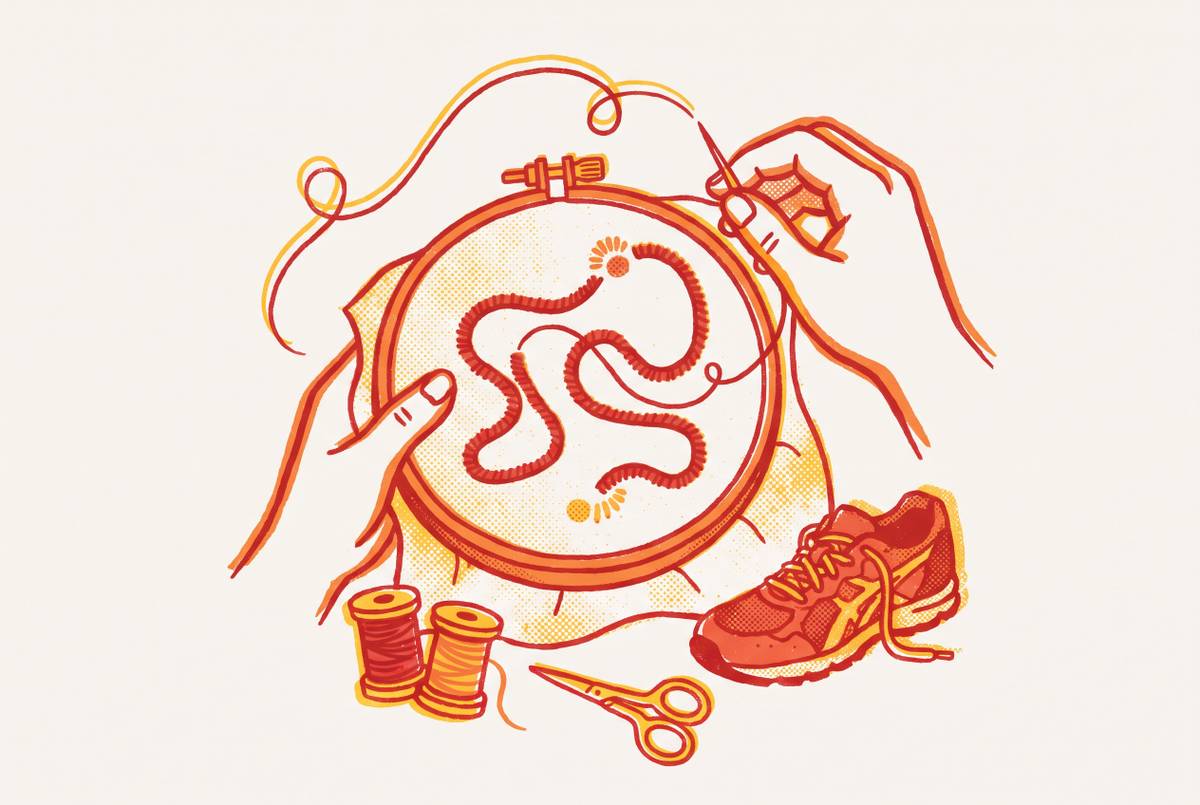
The GPX activity contains the geography from which the route can be reconstructed, including its shape, turns, and climbs. That file becomes the source for the commemorative design. Embroidery then requires digitization, the stage between the digital design and the embroidery machine that stitches the garment.
The distinction also clarifies what makes the result personal. A course name identifies an event, while the runner’s own activity supplies a record of their passage through it. Two people in the same race can produce different GPS files, and their training routes give the design a further basis for distinction. Those differences belong to the record, of which a wearable route remains a representation. Combining the race course with the training record makes the garment about both the destination and the work that preceded it.
Why embroidery on apparel holds this kind of meaning differently than print or metal
Embroidery gives that representation a physical texture. Thread stands above the fabric, can be read by touch, and catches light differently from the surface around it. The line’s slight relief makes the act of recording visible as stitching, a deliberate addition to a garment that already has a practical purpose.
Durability strengthens the connection, but it requires precise wording. Embroidery is more resistant to washing degradation than screen printing because the stitching forms part of the garment. It is not immune to damage. Hot water can weaken threads or fade colors, while harsh detergents can cause fading or fraying.
A digital design can pass through digitization to an embroidery machine for one garment, without the minimum orders that once made personalization economically impractical. Independent makers already make embroidered running apparel that shows race years, course names, and who the runner is. With a medal or a print behind glass, remembering centers on an object that is kept or displayed. Embroidered apparel allows the record to stay attached to something used.
Why running shorts occupy a uniquely honest position in a runner’s story
Running shorts have a claim on the training story because they were part of doing the work. They belong to the long miles and early mornings when the race was still an intention. Use connects the garment to conditions endured, routes repeated, and the gradual accumulation of readiness. A medal arrives after those experiences have already happened.
That chronology makes shorts different from an object created solely to celebrate the finish. The shorts started as something to run in and gained personal meaning through that use. The runner did not need to regard them as a keepsake for that history to accumulate. Nor does stitching a route onto them erase their earlier role. It makes a record explicit on an object already associated with the effort being recorded.
The distinction is strongest when the garment was actually worn through the build. A new personalized pair can represent the achievement, but it does not have the same history of use. Stitching the course on one leg and the training record on the other gives the training garment a further role without replacing its first one. The object used for the work becomes a place to preserve its outline. It can then return to the next long run, allowing the commemorative object to remain part of running.
How personalized running gear works as a gift when the runner can’t buy it for themselves
For a gift-giver, that connection offers a way to recognize more than the result. The runner may already be looking toward the next goal, with little time to mark the one just reached. Someone close to them may want to pause there. A personalized garment gives that wish a concrete form, grounded in the race and training.
Generic running gear can be useful without expressing that distinction. It signals that the giver knows the recipient runs, while a course and training record show attention to what this person actually did. Remembering the route, the race, and the reason it was significant gives the personalization its substance. The embroidered record becomes evidence of the giver’s attention as well as the runner’s effort.
That evidence can be warm without being sentimental. The garment does not need to explain every hard morning or add a message to every mile. Its connection to the runner’s own data supplies the reference. Usefulness then gives the gift somewhere to go after it has been received, because the shorts can join the next run. For the giver, this combines recognition of a completed effort with respect for the runner’s continuing life in the sport.
What it means to commemorate a race fully rather than just mark the finish
The medal remains a beautiful, earned symbol of completing a shared event. The personal record answers a different need. Where the medal identifies the race, a garment stitched from the runner’s course and training data identifies the work of one participant. The two forms can coexist without competing for the same role.
The choice of object determines how that personal record is encountered. GPS gives it a connection to actual activity, embroidery gives it texture and durability, and shorts place it within the practice that produced the achievement. None of those elements alone supplies the whole meaning. The keepsake holds together because what it records, what it is made of, and how it is used all point to the same experience.
The months before race day were part of the race. A keepsake honors that full span, preserving the course and the work behind it on something that can go running again.