What a First-Time Marathon Finisher Actually Remembers From Race Day
Runners recall the crowd and a face, so keepsakes should too.
A first-time marathon finisher remembers a life marker more than a performance, with crowd energy, personal decisions, and a supporter’s face often outlasting the finish time. The most meaningful personalized running gift preserves that specific experience through the runner’s name, race details, or actual GPS route. Its purpose is to recognize what this person went through.
Why a first marathon lands differently in memory than any other race
Arriving at a first finish line brings months of preparation into a single moment. The runner reaches an endpoint, but also encounters evidence of a changed self. That distinction gives the finish its emotional weight. A result records a performance against a distance and a clock, while a biographical event marks a before and after in someone’s understanding of their own abilities. A first marathon can be both, but its place in the runner’s life explains why the memory reaches beyond sport.
Kevin Masters, professor of clinical health psychology at the University of Colorado Denver, identifies self-esteem and a sense of achievement as primary motivations for first-time marathon participants. These are aims concerned with identity. Repeat marathoners can return for community and meaning already established, while first-timers are still establishing what the undertaking means to them. A moment that confirms or complicates a runner’s self-concept can become more significant than a split time, even when that split once seemed central to the plan.
What the months before race day actually do to a person's life
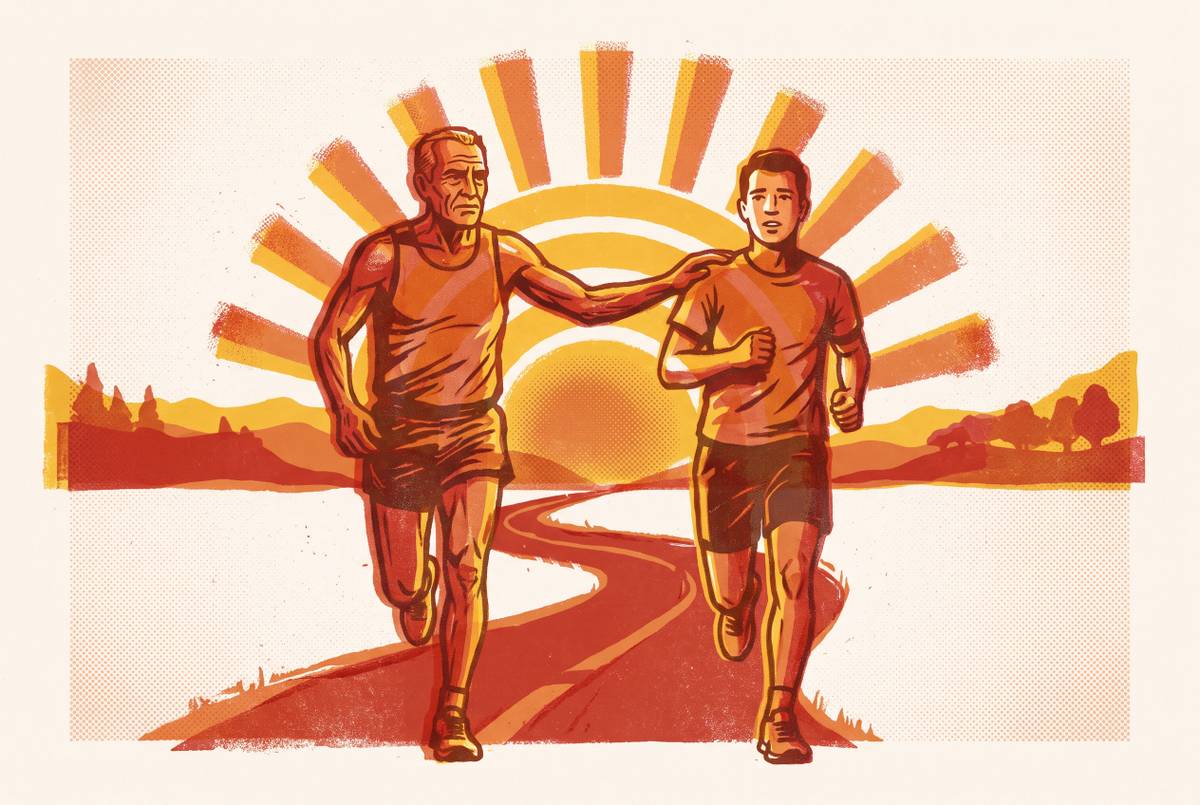
Dayle Silverio’s preparation began in January 2025, when he signed up for a shorter race that was pushed back because of wildfires. When he eventually ran it, he found it difficult. Over the following year, he ran longer races, used an app to track his weekly mileage, and joined the Little Tokyo Run Club for support. The changes reached beyond his running ability. By race day, his clothes fit differently, his blood-sugar numbers had improved, and his dog Atlas was in better shape.
Jose Hernandez Carcamo brought professional knowledge to the same process because he designs fitness programs. He tailored his own plan and then joined the LA Road Runners. His preparation included carbo-loading the week before the race, hydrating with electrolytes for the forecast heat, testing his race-day clothes, and running in compression socks. His assessment was direct. “I played things by the book and it was worth it”.
Weekly mileage creates a record of repeated commitment, while a running club makes other people part of that commitment. Even the dog enters the story. By the time the runner reaches the start, the race has already reorganized months of ordinary life, giving the eventual finish a history that the official result cannot contain.
The sensory and emotional fragments that actually stick from race day
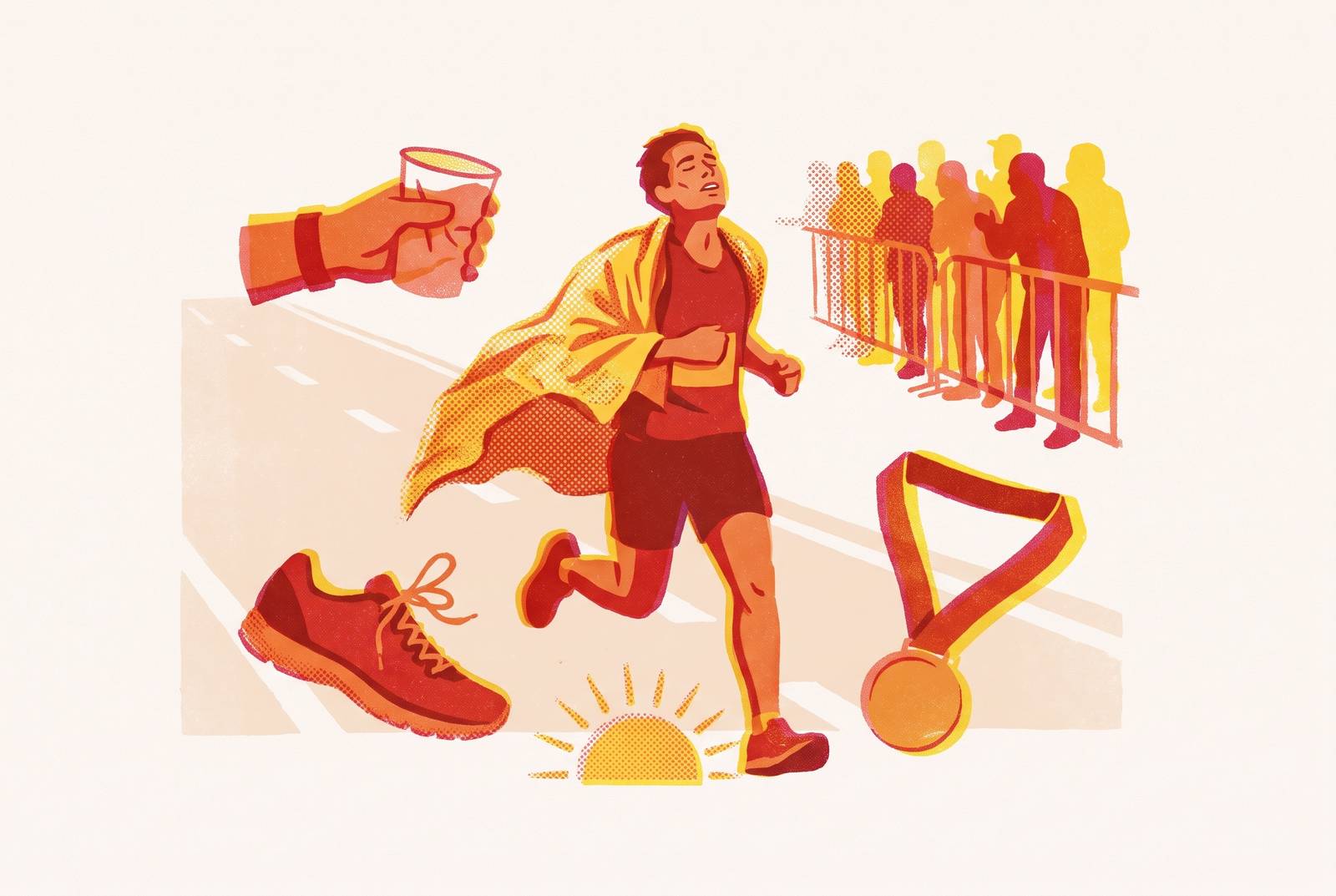
Hernandez Carcamo had prepared a playlist for the race, but he never used it. The sound he remembered came from outside his plan. “There was so much energy from the crowd everywhere. I think that speaks volumes about LA culture”. A carefully chosen accompaniment gave way to the people along the course. In his account, the memorable detail is not the music he expected to hear but the crowd that made it unnecessary.
For Silverio, support had a familiar face. His girlfriend, Leila Regio, appeared every couple of miles to cheer him on as he moved through the city. “She had her own marathon. She followed me around all the way to Culver City.” His experience of the course therefore included both her movement through it and his own.
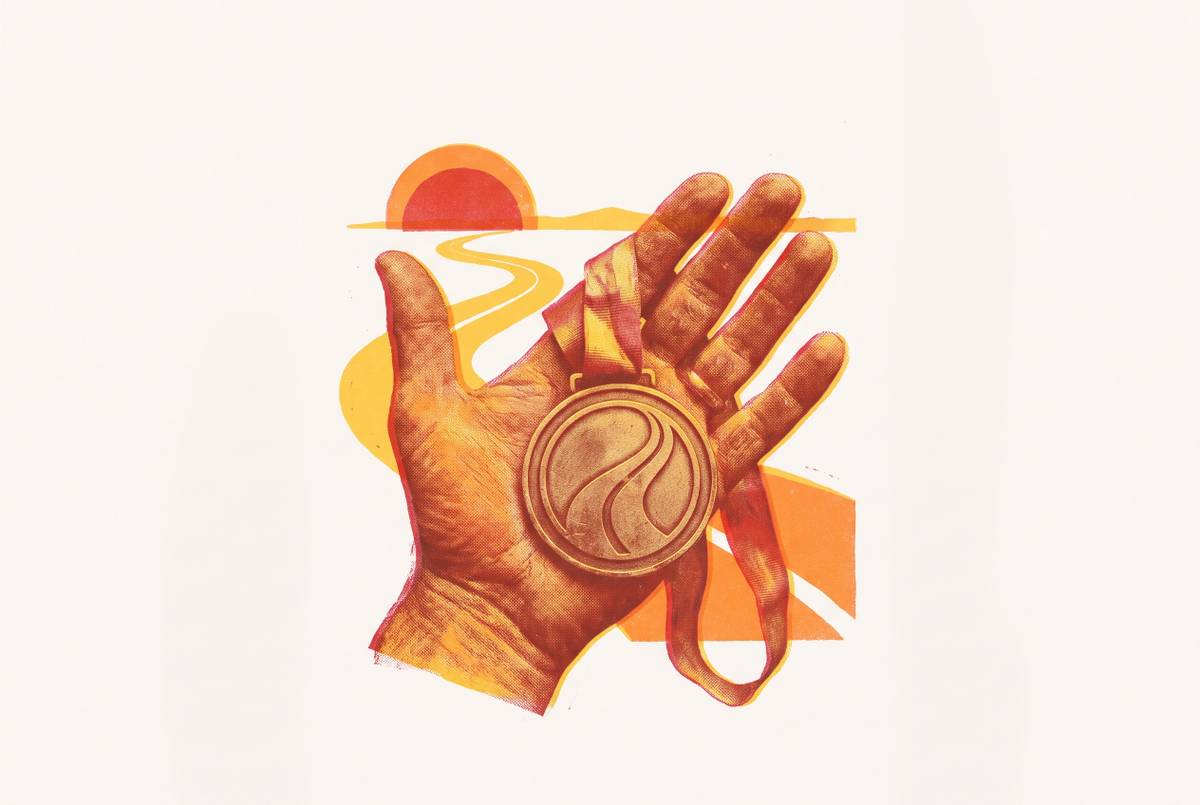
At mile 18, with the heat climbing into the low 80s, Silverio faced a choice. Race organizers offered an early finish, and he could take it or continue. He turned toward the early finish, where his medal was waiting. Regio was there with a homemade sign that read, “Your younger version of you would be proud.” He teared up.
The force of that scene lies in its particulars. The turn and the sign brought feelings he could not have expected at the finish line. Runners may anticipate remembering a time, a pace, or the relief of completion.
Why the memory of effort matters more than the official record of it
Silverio’s early finish requires a distinction between completing the stipulated distance and fulfilling a personal aim. He stopped at mile 18 of the 26.2-mile race. Race organizers explicitly offered an early-out medal because of extreme heat, so his medal reflected an option the event itself had provided. That context is essential to interpreting the object.
Silverio explained his own reckoning afterward. “I feel like I fulfilled what I set out to do. It was never about finishing the marathon. It was never about being the fastest. It was just about pushing myself to be a better, healthier version. And now the biggest challenge for me is getting ready to propose.”
The proposal was not an ambition added after the race to explain the result. From the start, Silverio had wanted to become a version of himself he felt proud to present to Regio when he proposed. Running was a vehicle for that aim. He was happy with the early finish because it served that goal, even though he had run less than the full marathon distance.
This distinction also answers the concern that a keepsake might commemorate something a runner did not fully do. An object need not imply a distance that was never completed. It can honor the actual route, the specific day, and the decision made under the conditions encountered. The standard is fidelity to the experience. A generic “26.2” would obscure a crucial part of Silverio’s story, while a record of his actual effort could preserve it.
What happens to self-concept after the finish, and why the feeling doesn't stay put
Silverio proposed on March 15, the week after the race, and Regio said yes. The running milestone became entangled with a defining event in his adult life. Its place in his biography was therefore not confined to the finish or the medal. The preparation had served a purpose beyond the course. Looking back at the race would also mean looking back at the person he hoped to become before asking that question.
A changed self-concept can persist after the intensity of the finish has faded. The runner can remember having done something hard even after each sight, sound, and feeling has lost its force. Those are different forms of remembering. One becomes part of who the runner is, while the other belongs to a moment that grows less vivid with time. The crowd, the heat, and the face at the finish can lose immediacy even as the milestone keeps its place in the runner’s life.
That gap gives a physical anchor a role. An object cannot reproduce the finish, but it can hold details outside the runner’s recollection and make them available again. Its usefulness depends on which details it preserves. A reminder of running in general has little to say about this particular transition.
What personalized gifts hold a first marathon memory better than generic running merchandise?
A finisher’s medal provides the first physical anchor, representing dedication, sacrifice, and perseverance. Yet every finisher at a given race receives the same one. It identifies the event more readily than the individual path. Personalized medals, sweatshirts, or ornaments can make a finer distinction through a name, city, date, finish time, or bib number.
A parent buying an NYC marathon ornament expressed that distinction plainly. “Great ornament for my daughter who ran her first marathon earlier this month! Love the personalization and quick delivery!” The gift was attached to her daughter’s first finish. That is the relevant comparison between a personalized object and a souvenir.
How GPS data turned the route itself into the most specific record of what a runner did
The runner’s GPS track adds another level of specificity beyond a name or bib number. It records the individual route through the race. Two runners on the same course do not generate identical tracks. Their lines show the turns they took, the tangents they followed or missed, and how they moved within the course, including a move toward the inside to find shade. The resulting shape belongs to a particular effort.
Services that use a runner’s Strava or GPX file can render that route as a print, a map, or an embroidered object. A depiction of the standard course represents the event, while a rendering of the runner’s own track represents their recorded path through it. Both may show the same city and recognizable course shape. Only the latter starts with the individual record.
That difference supplies a concrete criterion for a gift described as personalized to a race. A finish time records duration, and a bib number identifies a participant. The track shows the experience as a line through space. Seen as art, that line offers a way to encounter the course again without reducing the undertaking to a number.
Some keepsakes also use training data to record what happened before race day. Long runs, cutback weeks, and accumulated miles then become part of the commemorative object. This addresses the months of preparation that a race-only keepsake leaves outside its frame. It also changes what the object recognizes.
What the people around a first-time finisher are actually trying to give
A partner, parent, or training friend approaches the milestone from a different position than the runner. They are choosing a way to communicate recognition. Specificity does that communicative work. The city, date, time, and course show that the giver knows the race the person ran. An actual route can make that recognition more exact, while training details can acknowledge effort that happened before the public finish.
Regio’s sign illustrates this without needing to be a commercial keepsake. Its words about Silverio’s younger self echoed his wish to become someone he was proud of. A generic congratulation would have acknowledged success, but her message connected the moment to his self-understanding. His tears belonged to that connection between what he had tried to do and what another person recognized.
The timing of a gift changes its role. Before the race, it can cheer the runner on and look ahead to the day, while just afterward it can celebrate the finish. At the following holiday season, a keepsake can honor the milestone after the emotional intensity has settled. The strongest commemorative object makes visible the specific hard thing someone did, so that the runner can recognize it again and know that the people around them recognized it too.