The First Marathon Gift That Lives in the Body Not on the Wall
A wearable GPS route honors the training that built the marathoner, not just the finish line.
For someone who has just finished their first marathon, the most meaningful gift is a wearable piece embroidered with their own GPS route, race details, and training history. A framed print celebrates the finish, while a garment takes that achievement into the next run. The distinction is whether the gift preserves a completed event or accompanies the runner they became.
Why the wall print became the default marathon gift
The wall artifact is the dominant form of marathon commemoration, and its appeal follows directly from the event. The finish is visible, public, and easy to recognize as an achievement. A display gives that moment a place where it can last. It also makes a demanding physical effort legible to someone who did not see the training, through a course outline, a race name, or a finishing time.
The category’s merchandising language reinforces that logic. Phrases such as “a special way to commemorate achievements” and “celebrate every stride” frame the race as an experience ready to be preserved. The effort has ended, and the object gives it a setting. For a gift-giver, that is a clear proposition, because the display acknowledges a particular accomplishment without needing to become part of the recipient’s daily routine.
A framed print also separates commemoration from use. Its purpose does not depend on whether the runner trains again, wears it regularly, or takes it out of the house. That independence is a genuine strength. Someone who wants a lasting record of a completed race has good reason to value an object designed to remain in place. Display is not necessarily the best form of recognition for a first marathon.
What a first marathon actually is, and why the finish line is the wrong place to stop the story
For most runners, a first marathon matters more as a personal milestone than as a competitive result. The distinction changes what a gift recognizes. A finishing time records performance, but completing the distance also establishes something about the runner’s capacity that was previously unproven. Body and mind have been tested together. One participant described the result as “a sense of pure accomplishment that I don't think happens in a lot of other athletic events”.
That accomplishment is not confined to the public moment when the distance is complete. Glenn Geher states, “Effectively training for a marathon is really what's impressive -- and that end of things often goes unseen.” His distinction shifts attention from the finish to the preparation that made it possible.
The 1995 Masters & Ogles study found that self-esteem was a more important motivation for rookie marathon runners than for more experienced runners. It was one of several reasons they ran and could not fully explain every first-timer’s experience. Health, weight concerns, and reaching goals also played a part. For gift-givers, the useful implication is that recognition can reach beyond a result to acknowledge what the runner has learned about themselves.
A first-marathon gift therefore has two possible subjects. It can mark the race that someone completed, or it can recognize the person capable of completing it. The second takes in the training before the event and the running life that may follow, so there is more to commemorate than the finish line.
What sixteen to twenty weeks of training actually puts into the body
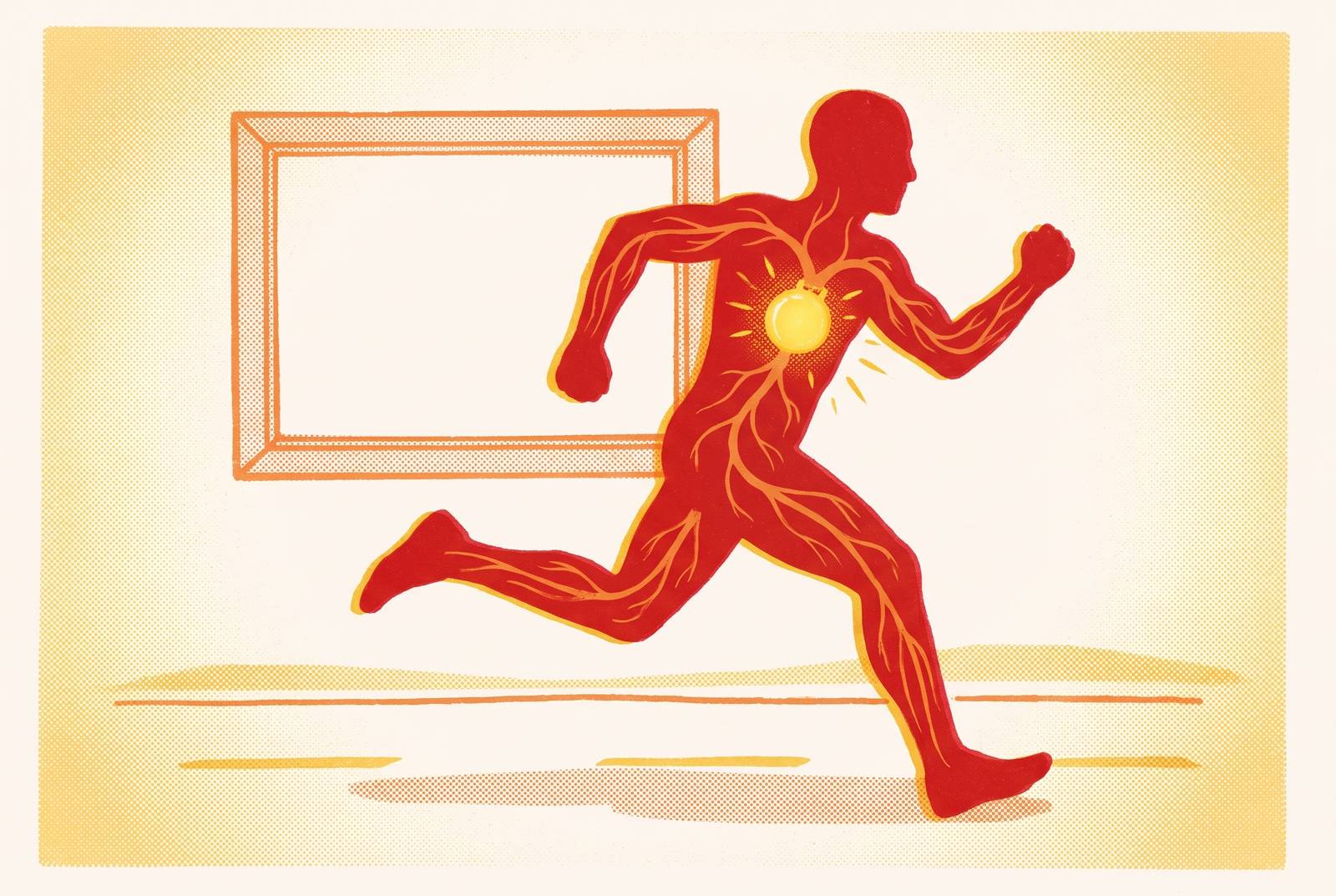
A marathon buildup of sixteen to twenty weeks changes what a body can do before race day begins. The achievement develops through a structured period of effort. Training makes the finish possible before it makes it visible. That sequence is central to the choice of a commemorative gift, because the public result rests on work that largely happened out of sight.
Peak training has the heaviest load, with the cycle’s longest runs and practice with race-day nutrition. Its timing varies with the plan. The significance for commemoration is not the exact week in which that load occurs, but the extent of the preparation already completed by then. The runner is building the capacity that the race will later put on public display, on tired legs and through mornings that have no audience.
The taper that follows is the period in which months of preparation come together before the official distance is attempted. By then, the runner can cover 26.2 miles, even though the race is still ahead.
A gift limited to the finishing time leaves that preparation implicit. The number shows what happened on race day, but not the weeks required to make it possible. Including the training period changes the scope of recognition. It gives the private buildup a place in the commemorative object rather than leaving the recipient to supply that part of the story.
How a GPS trace became raw material for art, not just a data file
The GPS trace gives physical effort a specific visual form. It records where the runner’s body traveled, turning a route into something that can be viewed apart from the activity itself. That record is more than a performance log. As raw material for art, it allows a commemorative object to begin with the runner’s movement.
Draw My Loop and RouteSketcher show how deliberately a route can be treated as a drawing. Their tools support a process of sketching a shape on a map, snapping it to real streets, and producing a GPX file to follow on a watch. The recorded activity becomes the drawing. The route is no longer only the means of completing an activity, because its shape is also part of the intended result.
A marathon trace approaches the relationship from the other direction. Rather than designing a run to produce an image, the commemorative piece takes an already completed run as its source. The distinction preserves the event’s personal specificity. Its visual form comes from where that runner went, rather than from an artist’s general interpretation of what a marathon should look like.
This creative practice establishes that a data file can become an artifact without losing its connection to physical effort. A route can be placed behind glass or stitched into fabric. Once the same personal record is available to both forms, the choice turns on the role the gift should play after the race.
Why a wall print and a worn garment answer different questions about what a race means
A framed print has a strong claim on permanence. It can last decades, while a garment is washed, worn, and eventually retired. A runner who values an enduring display may reasonably prefer the print, and the wearable form does not need to outperform it on longevity to offer a different kind of meaning.
A print holds the finished race in view, while a garment can return to the activity that produced it. The route goes to another training run, another cold morning, or a café stop after the effort.
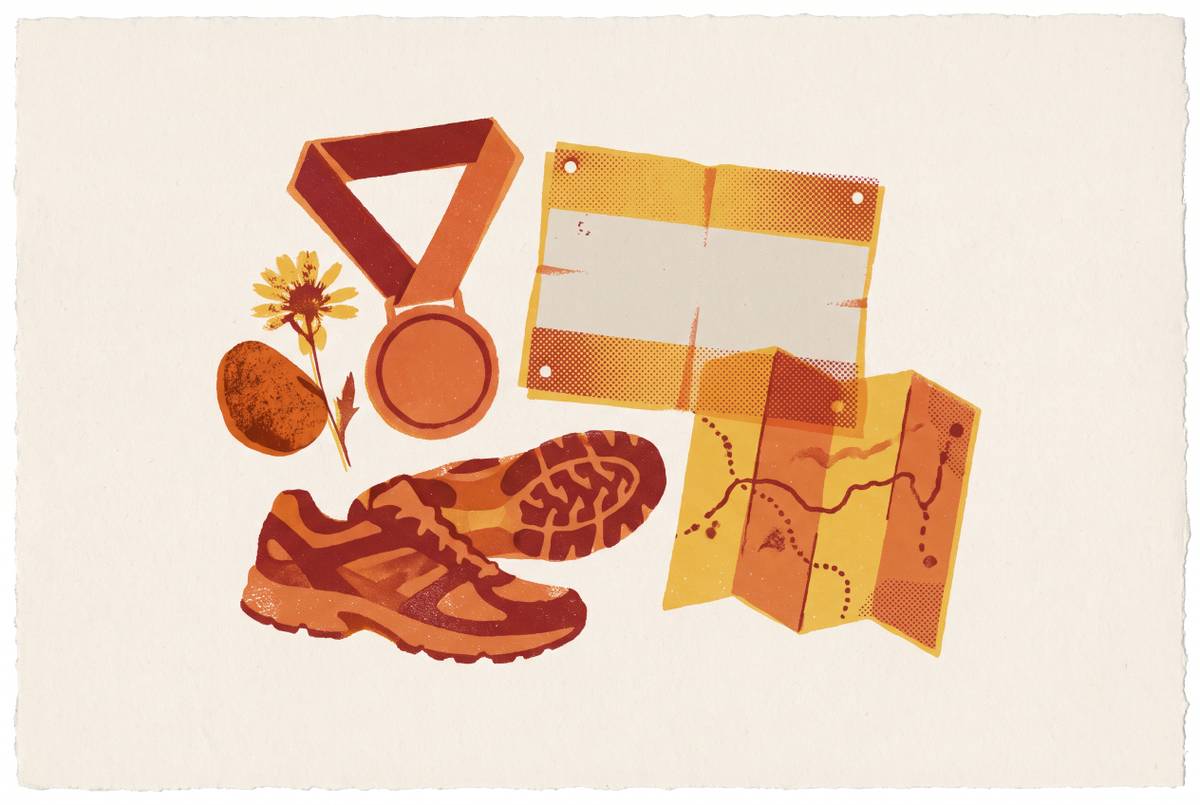
Many runners report greater attachment to their bib than to their finisher medal because the bib covered the distance with them. It was there during the effort. A stitched piece that echoes a bib’s format draws on that association, although it is not the original object and should not be confused with one that actually traveled the course.
A garment can build its own bond with the runner as they wear it. One buyer described a gifted marathon jumper as “beautifully soft”, called its design “stunning”, and reported that the recipient “has worn it every day to training”. That account illustrates how the gift can return to the practice it commemorates.
The achievement was developed in the body because the training happened there. Clothing puts its record back in that setting. Its eventual wear is therefore compatible with its purpose.
What specificity means in a commemorative gift, and why generic running themes miss the point
Specificity separates a gift about an achievement from an object about a sport. “Chicago Marathon, October 11, 2026, 4:12:33” identifies an event, a date, and a result. A running silhouette identifies only an activity. The example does not need an elaborate design to establish the distinction, because the information itself gives the object a personal referent.
The race name, date, and finish time form the foundation of that recognition. The runner’s own GPS trace adds the route they recorded, while the training weeks acknowledge what preceded it. Each detail answers a different question. These details give the gift its emotional weight by showing what the person achieved beyond their love of running, with no need for a slogan.
The Etsy marathon embroidery market demonstrates a spectrum of personalization. Club sweatshirts and “marathon era” motifs express affiliation with running, while race-specific designs narrow the reference to a particular event. Neither approach is inherently unsuitable as clothing. They simply recognize different things, and a first-marathon commemoration asks for more precision than a general expression of sporting identity.
A personalized NYC running sweatshirt with custom race bib detail gets closer to that level of detail. A marathon running sweatshirt featuring Garmin, shoes, bib, and icon embroidery also draws on recognizable elements of the runner’s experience. Both approaches make the subject more concrete. However, they stop short of using the runner’s own GPS data, which ties the design to the recorded activity.
The selected details should identify the achievement. A visually restrained piece can be highly personal when its route and result belong to the recipient, while an elaborate running-themed design may still say little about their first marathon.
What do you give a first-marathon finisher when the course, time, and training all deserve recognition?
The best wearable gift brings together the course’s GPS route, the time earned, and the weeks of training that made the result possible. The garment then provides a setting in which those details can accompany further running.
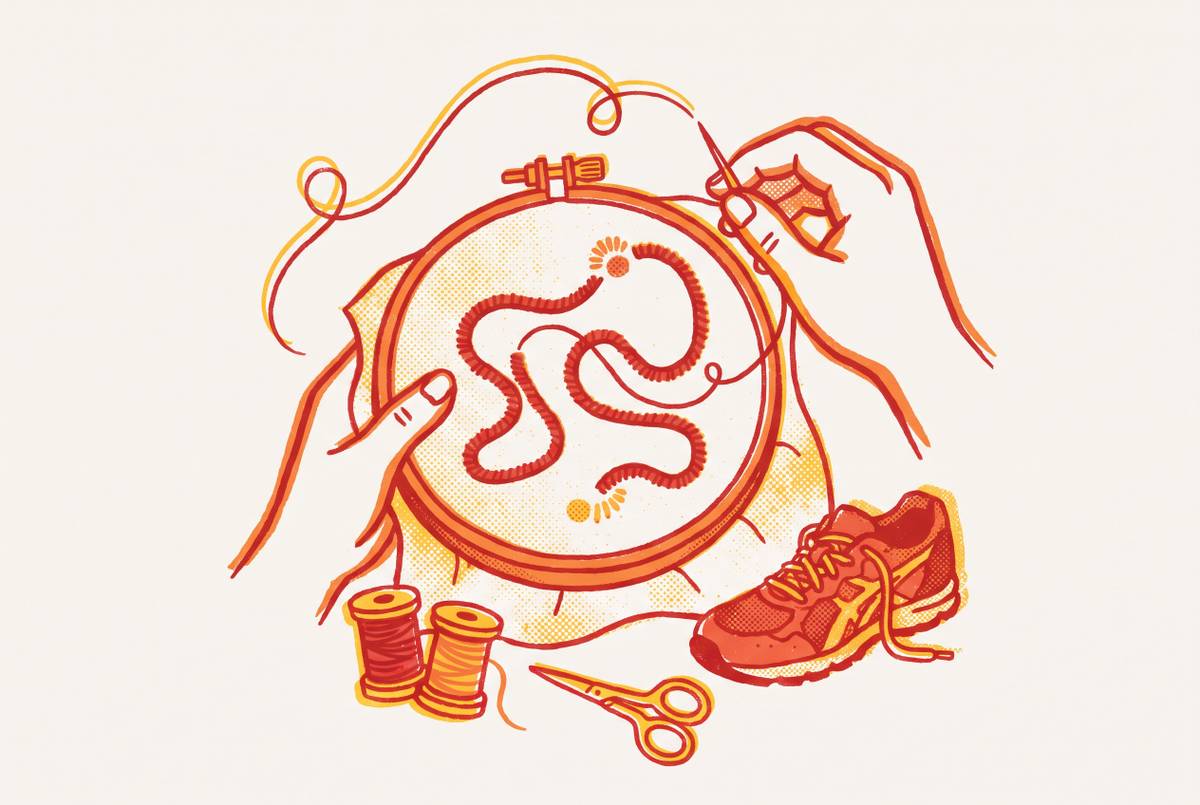
Embroidery puts that record into the fabric itself. Thread stitched into a garment does not fade like inkjet printing, though the garment will still be washed, worn, and eventually retired. The stitched route is intended to participate in use.
Each piece is made to order because it starts with one runner’s record. A piece that starts with the recipient’s GPS data from Strava, Garmin, or a GPX file begins with their recorded effort. The finish time and training history make the reference more complete. The resulting gift is one of one by construction, because its defining material belongs to that runner’s achievement.
A framed print is a good choice when the gift is meant to stay on display for years. An embroidered garment is the stronger choice when the purpose is to accompany the runner into what comes next. Its most fitting setting is not a wall above the finished story, but the next long run.