Custom and Personalized Running Apparel for Race Day
Personalized race gear works best when it records the training, not just the name.
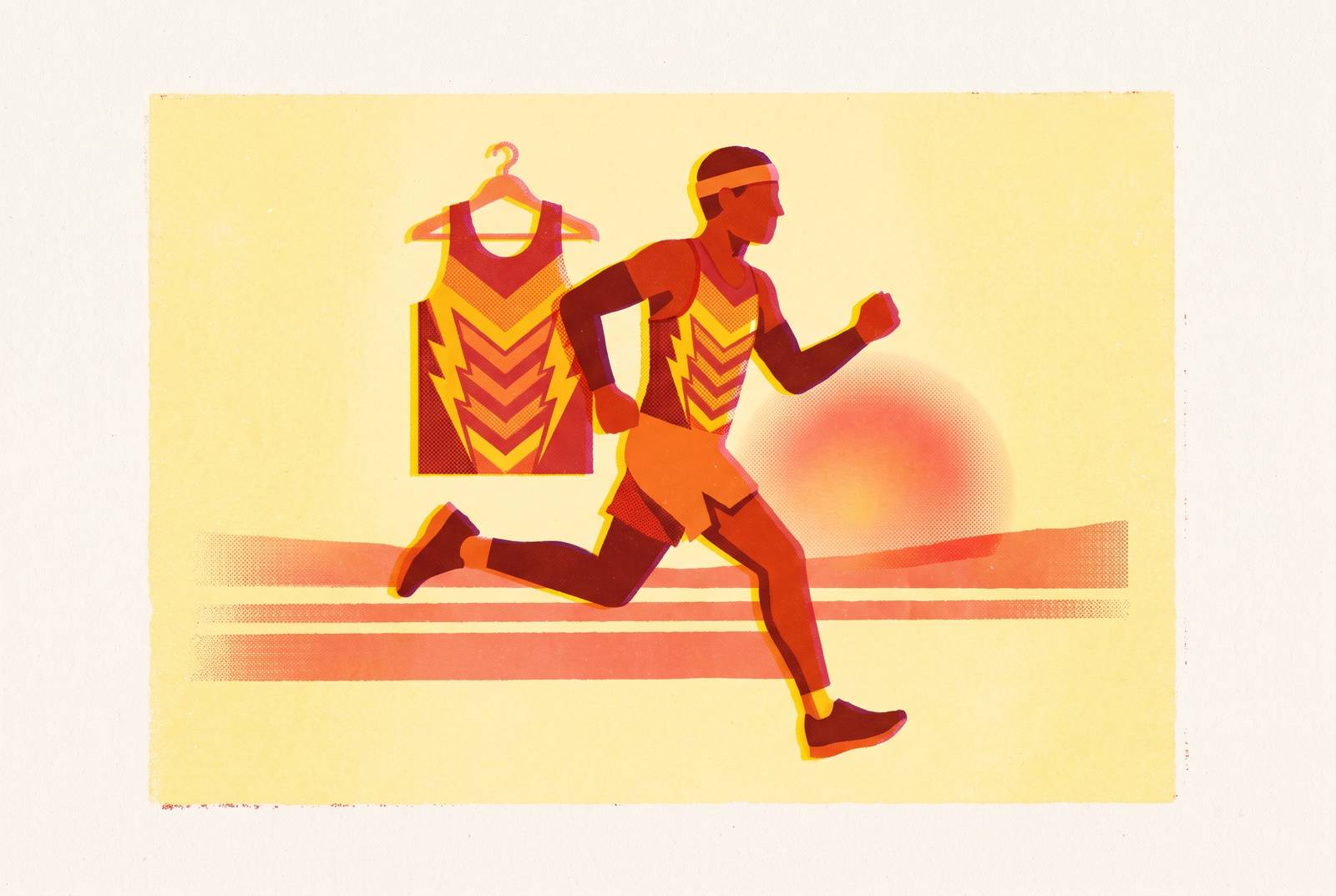
For someone who has just finished a first marathon, a GPS-sourced route print or personalized running garment can record more than a name and finish date. The best gift shows the runner’s course and the training that helped them reach the finish. Custom and personalized running apparel for race day is most meaningful when it combines that specific record with a garment built to be worn.
Why a runner wears something personal on race day
At the start line, a runner’s shirt may show a name, a club logo, or the cause that brought them there. A marathon is a public ritual as well as an athletic event, taking runners through open urban space in front of strangers for hours. Clothing gives that public effort an identity that other race-day objects cannot express in the same way.
That identity has different purposes before, during, and after the race. Before the start, it expresses why someone signed up. Once the miles become difficult, attention narrows to the task, while the shirt’s message remains available to the crowd. Later, the same detail becomes part of the photographs and the memory.
What most personalized race apparel actually does — and what it leaves out
Most personalized race apparel establishes a connection to other people. A charity shirt shows the cause a runner supports, while club and company kits show the groups they belong to. Matching apparel can also make a support crew easier to spot on the course. These are useful forms of recognition.
Individual customization usually adds a runner’s name or nickname, hometown, race year, first-marathon milestone, or short motivational message. These details identify the runner without describing the preparation. A name print establishes ownership, but it does not record the work that brought its wearer to the start. The finisher’s medal has a similar boundary, since every finisher receives the same one. It proves completion without distinguishing the months of effort behind that result.
The gap is therefore not between personal and impersonal clothing. It is between identification and a record of achievement. A shirt can express a deeply held cause while leaving the runner’s particular journey unrecorded. More specific personalization addresses that omission without replacing what club kits, charity shirts, and name prints already do well.
What the training buildup actually contains, and why it disappears after the finish
Marathon preparation consists of phased work spread across many weeks. Runners build an aerobic base, increase mileage incrementally, and arrange long efforts and rest across the calendar. Race day ratifies what that preparation has already built, concentrating a long process into a single public event. The finish is visible in a way that the buildup rarely is.
That buildup also includes uncertainty, pressure, and changes in confidence. Runners experience highs and lows and question why they signed up, even as the calendar demands another effort. An early alarm belongs to that history as surely as the finish line does. So does a punishing training session. The race compresses those experiences into one morning, but its result cannot describe them individually.
Afterward, the most visible objects tend to be the medal and race shirt. The accumulation behind them is harder to see. A training log may contain the runs, miles, and weeks that fall outside what shared event objects can express about the achievement. It is a limit on how much of the achievement a shared event object can express.
For a first marathon in particular, the distinction changes what a personalized gift can acknowledge. Marking the finish honors the result, while recording the training honors how the runner changed along the way to make it possible. Neither requires treating the race as secondary. Rather, the training gives the finish its context and makes the achievement specific to the person who earned it.
How GPS data turns a runner's route and training into something wearable or displayable
GPS tracking data provides a way to represent that specificity. A runner’s own device records the geography of an effort, allowing a course, route, or set of miles to become part of a personalized object. The route supplies more than an event name. It ties the keepsake to the place where the effort happened, while individual details distinguish the runner’s experience of that place.
Prints are widely available for Berlin, New York, Paris, London, Boston, Chicago, Tokyo, and Sydney, and individual sellers on Etsy have accumulated thousands of reviews. A print can show a well-known event or include the runner’s own data, which gives it a more personal meaning.
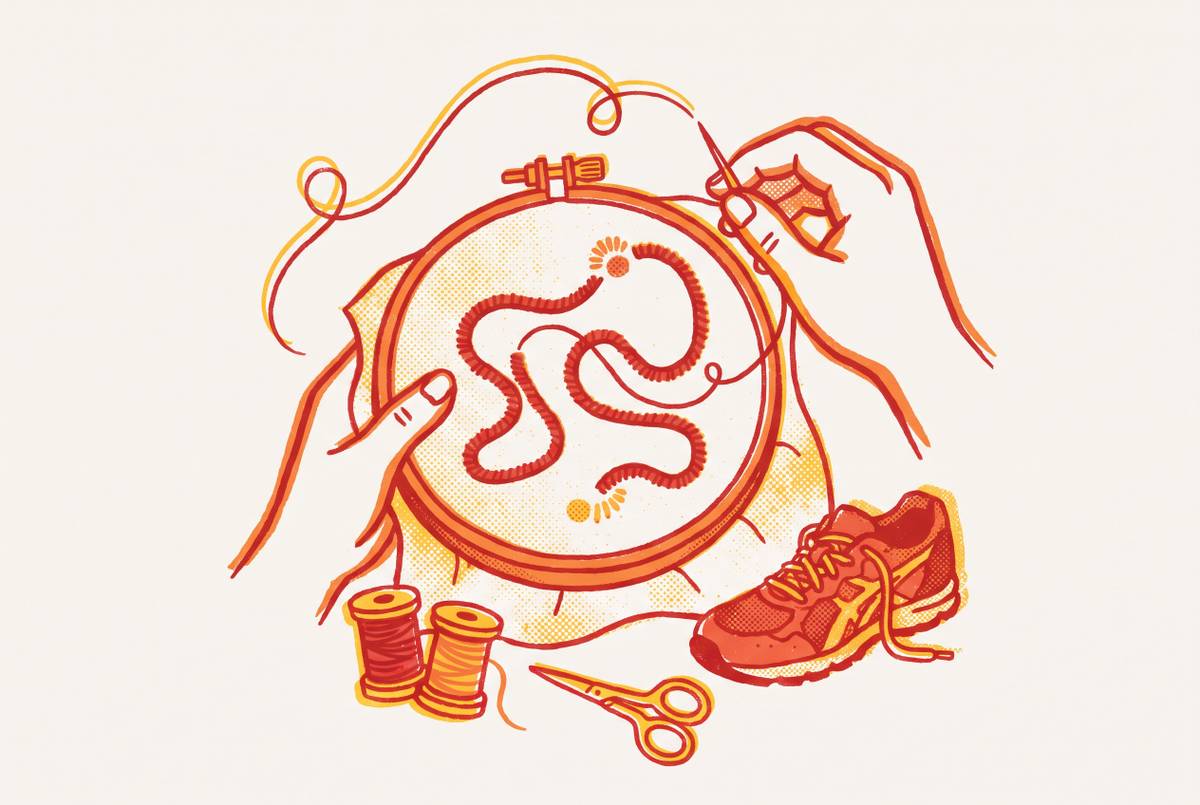
That principle extends from a wall print to apparel. A garment can put the course on one leg and the training record on the other, bringing the event and its preparation into the same object. Laurels, which makes made-to-order running shorts embroidered with the runner's own Strava, Garmin, or GPX data, is one example. The garment then becomes a record of effort. Unlike a name added to a standard design, its defining details explain what the runner did and where they did it.
The craft question — why production method shapes what personalized apparel can carry
The production method must suit the fabric for the details to hold up through repeated use. Embroidery creates a stitched, polished finish that is durable through repeated washing. It works best on thicker, sturdier fabrics, including cotton, fleece, and polyester blends. Lightweight or stretchy fabrics present a different problem. They can pucker, bunching around the stitches and leaving an uneven surface.
Direct-to-film (DTFlex) printing offers a different combination of properties. It works on performance fabrics and stretches with the garment without cracking, making it suitable for athletic apparel that needs durable color. Its appearance is closer to a graphic than a stitched craft object. The light fabrics suited to race-day running are precisely those that make traditional embroidery more demanding.
Made-to-order embroidered running shorts therefore call for care in choosing how they are made. Single-unit custom embroidery with no minimums is achievable, with typical turnaround ranging from several days to two weeks after design approval. The approval is a production checkpoint. It is the opportunity to settle the personalized design before it becomes stitching on the selected fabric.
What race-day performance rules mean for any personalized garment you plan to wear
A personalized garment still has to perform over 26.2 miles. Its commemorative value cannot compensate for discomfort on the course. Race-day clothing, shoes, socks, and accessories should have worked well when worn during training. For personalized apparel, that means trying out the finished garment to check that its design and fabric work together.
A shirt’s fit should allow comfortable arm movement, and seams or edges should not irritate the skin. Fabric should remain comfortable when wet with sweat. Printed or decorated areas should not create friction, and the garment should work with a bib, fuel belt, or other required gear. These checks connect the production decision directly to the runner’s experience.
NYRR requires participants in the 2026 TCS New York City Marathon on Sunday, November 1, 2026, to keep their bib fully visible on the front of the outermost garment. A custom shirt worn over the bib would violate that requirement.
The lesson for made-to-order purchases is to allow time for training after production. A garment approved and stitched only a week or two before the race leaves little room for a long-run test. If the timing does not allow it, the garment can instead serve explicitly as a post-race keepsake.
How official race merchandise handles commemoration — and what it doesn't do
Event merchandise generally celebrates the race and its city. Tracksmith’s Marathons Collection covers all seven World Marathon Majors, namely Tokyo, Boston, London, Sydney, Berlin, Chicago, and New York. The collection describes its city-specific gear as designed to celebrate the journey to the starting line. Its range includes tees, singlets, sweatshirts, outerwear, shorts, and accessories, with some pieces marked Limited Edition. The city is the shared point of recognition.
Nike released the official 2026 Chicago Marathon collection on September 24, 2026, including the ‘Chi ca Go’ singlet, tees, and race-day gear. Separately, rabbit’s Chicago Race Kit included the Go Time singlet, Crusher Pocket Crop with a built-in sports bra, and Fuel n’ Fly shorts with five pockets for race nutrition. These products combine race association with garment functions. They do not make the individual runner’s training record the core design.
The Chicago Tribune offered a more result-specific keepsake for the same event. Its personalized 2026 risograph print featured each runner’s bib number and finish time, with orders shipping starting October 15. That is a closer form of individual commemoration. It is still a poster rather than a wearable, and it belongs to a single event’s official partnership.
The distinction is one of product purpose. Many runners buy merchandise with the same event design, colorway, and information. Individual results generally appear as an add-on or separate product. A garment built around a runner’s own course and preparation begins with a different subject, even when it commemorates the same race.
What is a meaningful personalized gift for someone who just finished a marathon?
A GPS-sourced keepsake is a strong choice when the gift should recognize a particular marathon. The right kind of gift depends on how it will be used. Route art makes the course displayable, personalized apparel makes the record wearable, and functional keepsakes give race objects a place to live. The decisive criterion is how much of the runner’s specific achievement the gift preserves.
For a display gift, a route poster can include the runner’s name, finish time, pace, and date. That combination records both the course and the result. For a wearable gift, race-name sweatshirts, custom bib shirts, and finisher crewnecks mark the event, but rarely include the individual’s data or buildup. A garment that shows the route and training record can tell more of the runner’s story. Its fabric and decoration still need to suit how it will be worn.
Engraved medal hangers, personalized training log magnets, and race bib display frames can organize or display parts of the achievement. They are practical, though typically event-generic. Their suitability depends on whether the recipient wants an object for display or something that becomes part of the running kit.
For a GPS-sourced gift, the first step is to ask for the runner’s activity data. A Strava activity, Garmin export, or GPX file is usually already on the runner’s phone. The next decision is whether the gift should show the race route, the training record, or both. Asking for those details is itself an act of attention, because it makes the actual effort the subject of the gift.
What to look for when choosing personalized running apparel that will actually be worn
Choose which personal details to include before deciding how they should look. A course, finish time, or training record gives the garment a specific subject, while a name on a generic design serves a narrower purpose. Then match the production method to the fabric and intended use. Embroidered training shorts need fabric that will not pucker, while a printed race-day singlet needs to stay comfortable when wet. Specificity and wearability are separate tests, and both must be met.
For made-to-order pieces, approve the design before anything is stitched or printed. That is the point at which errors should be resolved. Timing should also reflect whether the garment is intended for the approaching race or as a gift after it. A race-day purchase needs time to be made and worn successfully in training, while a post-race keepsake can follow a different schedule.
Finally, consider the garment’s place in the runner’s rotation. The commemorative detail should be integrated into something worth wearing on the next long run. The best personalized running apparel is both a record of the work and clothing that can survive the miles ahead.